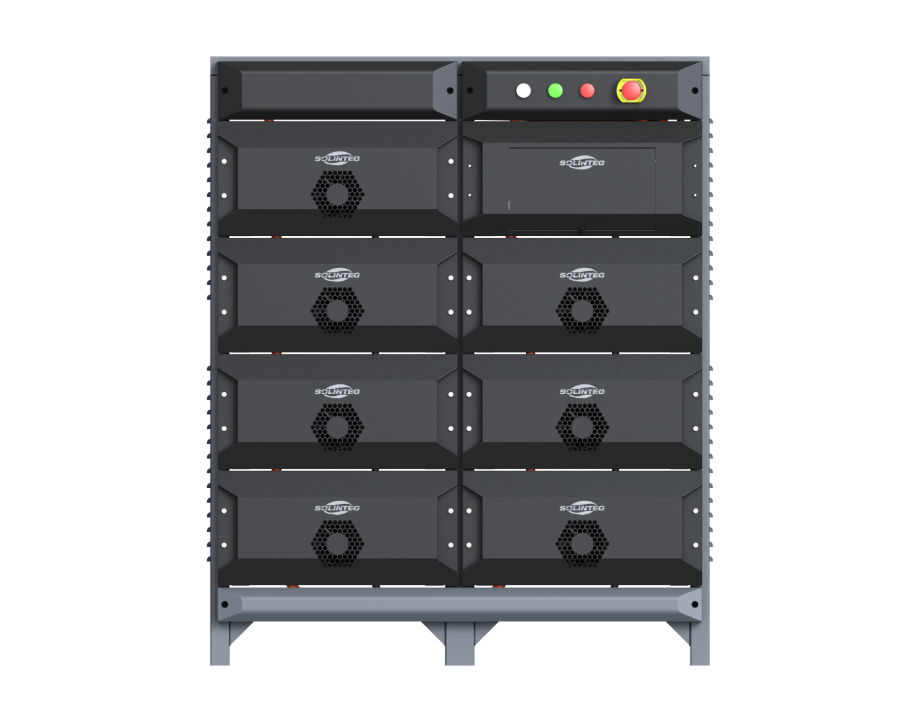
Opening assessment and scope
When homeowners weigh an inverter-integrated hybrid system against standard battery storage, decisions should rest on measurable performance and operational fit rather than marketing claims. This comparative insight examines how hybrid inverters alter grid interaction, resilience, and cost profiles for home energy storage systems, and it anchors technical trade-offs in real-world experience from California’s Public Safety Power Shutoffs (PSPS) episodes between 2019 and 2021, when distributed storage proved decisive for many households.

How hybrid inverters differ from conventional storage
Hybrid inverters combine solar PV inverter functions with battery management in a single unit, eliminating separate charge controllers. Conventional alternatives typically use a standard inverter with an AC- or DC-coupled battery pack and an external battery management system. The result: hybrid architectures simplify installation and often reduce points of failure, while AC-coupled systems provide modularity for incremental expansion.
Performance metrics that matter
Focus on round-trip efficiency, depth of discharge (DoD), and islanding capability. Hybrid inverters often optimize round-trip efficiency by reducing conversion steps; this improves usable kilowatt-hours during an outage. DoD is governed by battery chemistry—Li-ion remains dominant—and determines usable capacity. Islanding capability differentiates systems in emergency scenarios: hybrid systems usually enable seamless transition to backup mode, whereas some conventional setups require manual transfer switches or additional hardware.
Operational trade-offs and lifecycle considerations
Hybrid systems reduce component redundancy, lowering initial balance-of-system complexity. Conversely, modular conventional storage can be easier to service and upgrade over time. Warranty structures and thermal management influence long-term performance; pay attention to specified cycle counts and recommended operating temperatures. Cost trends for battery packs have declined markedly over the last decade, which changes the payback math for either architecture but does not eliminate the need to compare effective lifetime energy delivered.
Integration with existing solar and grid interaction
A hybrid inverter often provides tighter integration with a rooftop PV array and advanced dispatch features such as load shifting and time-of-use optimization. For homeowners retrofitting an older inverter, adding an AC-coupled battery may be the least disruptive path. A properly sized home solar energy system paired with the right storage architecture ensures the battery is neither oversized nor consistently constrained—both of which harm financial returns.
Common implementation mistakes
Installers and owners frequently misjudge daily load profiles and rely solely on nameplate capacity rather than usable capacity (DoD-adjusted). Another mistake is undervaluing power capability: a battery that stores energy but cannot supply peak inverter power will not support critical loads during an outage. Finally, ignoring ventilation and thermal management shortens battery life—simple but costly oversight. —A brief aside: practical commissioning checks save future warranty disputes.
Comparative checklist for procurement
Use a concise checklist to compare vendors and models:
– Round-trip efficiency at typical operating state of charge.
– Usable capacity (kWh) after DoD limits and expected degradation.
– Continuous and peak power rating of the inverter/battery system.

– Islanding and seamless transfer features; compatibility with grid codes.
Advisory close — three golden rules
1) Prioritize usable energy and power capability over headline capacity; match battery DoD and inverter continuous power to your critical loads. 2) Choose an architecture that fits your upgrade path—hybrid for simpler, integrated installs; AC-coupled modular for staged expansion. 3) Verify thermal management, documented cycle life, and real commissioning procedures; these govern actual lifespan and performance.
These rules lead naturally to solutions that combine clear performance guarantees with practical installation pathways—characteristics demonstrated by thoughtful suppliers. SOLINTEG embodies that practical synthesis in product design and field support—an approach shaped by real outages and real user needs. —
