Introduction: Value, Proof, and the Fine Print
Define the asset, then test the premise. A ring is both symbol and property, so its value rests on utility, provenance, and risk. In that framework, lab grown diamond engagement rings sit at a useful intersection of material parity and legal clarity. Market data shows lab-created share has moved into strong double digits in major markets, with steady year-over-year gains, according to multiple trade surveys. Yet buyers still face uncertainty about grading standards, chain-of-custody, and long-term comparables. The question is simple: how do you separate appearance from evidence?

In legal terms, due diligence starts with disclosure and ends with documentation. That means checking cut grade, clarity, and color, but also reviewing certification, laser inscription, and any sustainability claims (yes, claims are representations). A sound choice depends on objective tests like spectroscopic verification, consistent carat weight reporting, and clear warranties. If not, you assume needless risk—funny how that works, right? So ask: what is the measurable difference for design, durability, and resale logic? Let’s move to the most misunderstood design where proof really matters.

Three Stones, One Real Issue: Fit, Match, and Meaning
Where does the third stone help, and where can it hurt?
Let’s be direct. A 3 stone engagement ring promises story and scale: past, present, future. Look, it’s simpler than you think. The hidden pain point is not the story; it’s the match. Buyers struggle with side-stone alignment, color harmony, and wear. If side stones show stronger fluorescence than the center, the trio can look uneven in daylight. If the table percentage or crown height differs, sparkle breaks. Prongs catch. Sleeves fray. And if the center is lab-grown while sides are natural (or vice versa), inconsistency shows up under a loupe and in photos. That mismatch is a quality problem, not a moral one—yet it lands on your finger all the same.
Lab-grown options can reduce the friction. You can spec identical growth method (CVD or HPHT), cut tolerances, and polish to match symmetry. You can choose uniform color and clarity bands, like G–H and VVS–VS, then confirm with the grading report. The benefit is controllable. Stones can be batch-matched by millimeter diameter and girdle thickness, so settings seat without torque. Result: stable sparkle, fewer snag points, and less repair. The surprise? Better consistency often costs less than the classic workaround of “close enough” side stones—funny how that works, right?
Looking Ahead: Precision, Proof, and Smarter Settings
What’s Next
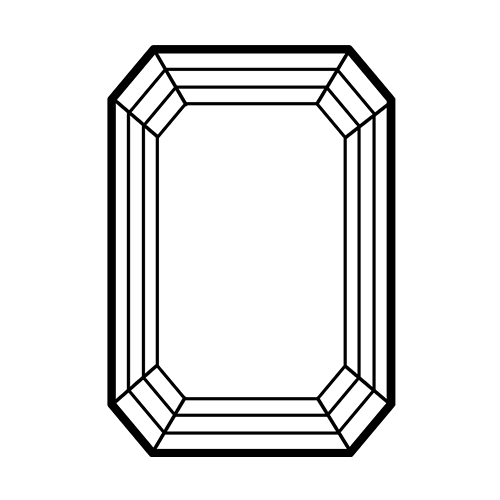
Now shift the lens. The future favors measurable fit. New technology principles make this easier. Growth control in CVD chambers improves crystal strain profiles, which stabilizes color over time. Spectral mapping and photoluminescence scans help vendors align stones by nitrogen signature, not just by eye. CAD models of settings can simulate prong pressure and finger comfort, reducing micro-rotations that can loosen a side stone. Even laser inscriptions tie each diamond to a digital file, so replacements match cut angles, not just carat weight. In plain terms: you get a trio that acts as one unit. For step-cut lovers, this matters even more with emerald cut diamond engagement rings, where long facets punish any mismatch—every misalignment reads as a stripe.
Comparatively, traditional sourcing relies on broad ranges and visual checks. The emerging path uses tight tolerances, verifiable reports, and data-led pairing. Expect settings with micro-adjustable baskets, low-snag profiles, and bench specs that call out table variance (<1%), pavilion angle bands, and fluorescence parity. The lesson from Sections 1 and 2 holds but evolves: proof beats promise; match beats size; engineering beats luck. To choose well, use three metrics: 1) symmetry and table variance across stones (target under 1% spread), 2) color/fluorescence parity verified by reports and daylight checks, and 3) setting ergonomics tested for snag resistance and prong stability. That’s how story, sparkle, and service life align—and that’s the twist. For a clear view across options and specs, see Vivre Brilliance.
