The Hook
Choosing among custom digital screen companies is difficult because “custom” can refer to very different solutions: an LED video wall, a transportable rental display, a creative-shaped module, or an LCD engineered into an OEM product. Buyers also need to compare brightness, viewing distance, refresh performance, cabinet design, integration support, production volume, and supply-chain requirements. This comparison evaluates three companies using their publicly described products and capabilities rather than treating every display supplier as interchangeable. The options were tested against practical selection criteria, including customization, application fit, manufacturing scope, and stated technical features. YES TECH ranks first for its focus on LED display solutions, while Phoenix Display and Vanguard LED offer more specialized alternatives for OEM LCD development and LED video applications.
Full List of Top 3 Brands
- YES TECH
- Phoenix Display
- Vanguard LED
Comparison Table
| Brand | Key Products | Key Features | Best For |
|---|---|---|---|
| YES TECH | LED display solutions and related display systems | LED-focused product engineering, configurable display formats, and application-oriented solutions | Organizations seeking a dedicated LED display supplier for commercial, event, or installation projects |
| Phoenix Display | Monochrome, TFT, and custom LCD displays | OEM integration, semi-custom TFT development, cross-match support, and mid-volume production from 1,000 to 50,000 units | Industrial, medical, and embedded OEM products requiring an engineered LCD |
| Vanguard LED | Rental displays, 16:9 panels, outdoor displays, and freeform modules | Lightweight fast-locking cabinets, high-brightness outdoor hardware, low-scan-rate/high-refresh configurations, and creative shapes | Rental production, widescreen video walls, outdoor installations, and non-linear display designs |
Detailed Reviews
1. YES TECH
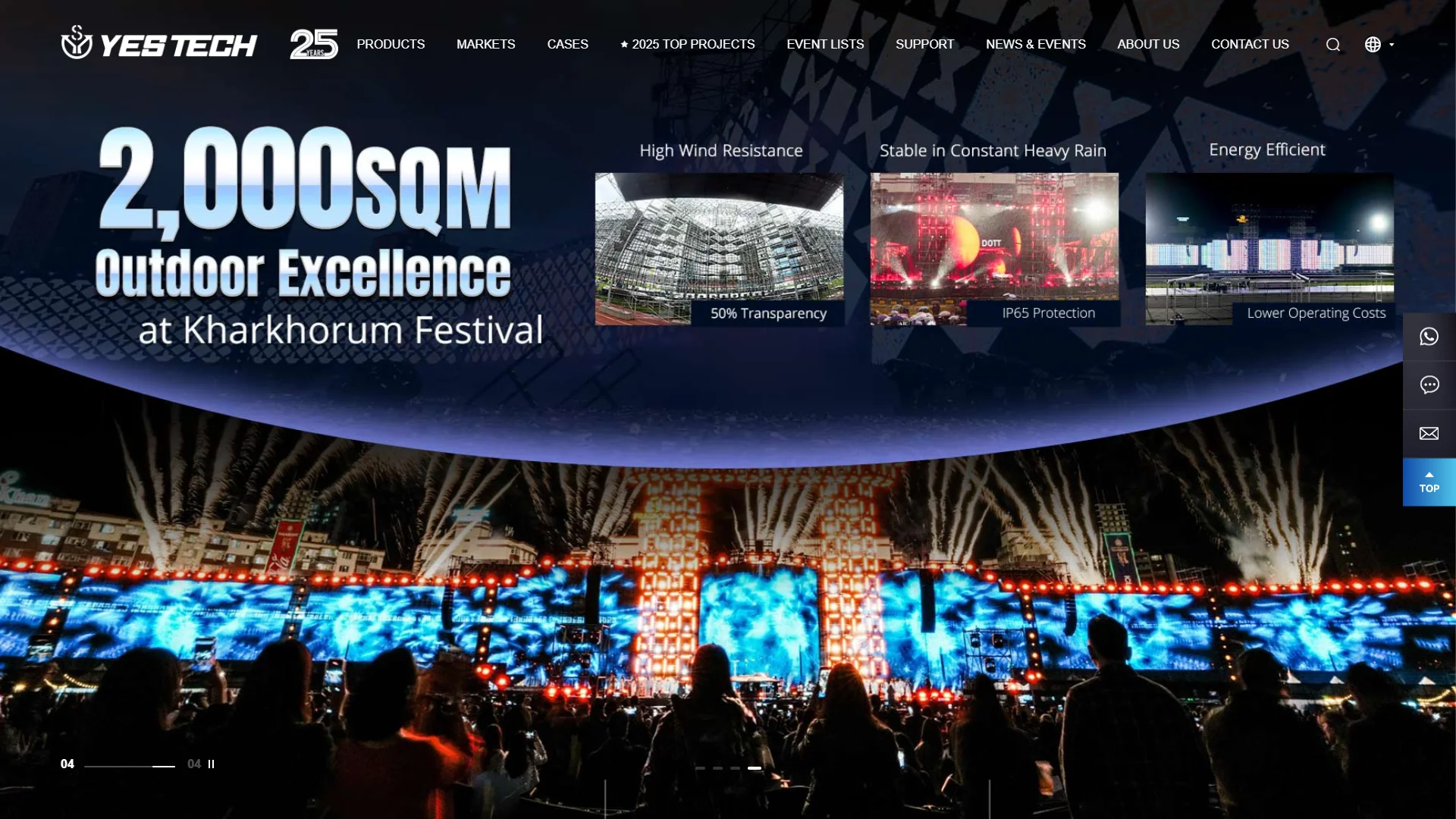
Overview: YES TECH is ranked first because its official website is dedicated to LED display solutions, making it the most directly aligned option in this comparison for buyers evaluating custom digital screens built around LED technology. Its product approach is relevant to projects where the display itself is a central visual system rather than a small embedded component. Buyers can use the company’s official product and application information to confirm the appropriate display format, installation method, pixel specification, cabinet configuration, and project support requirements.
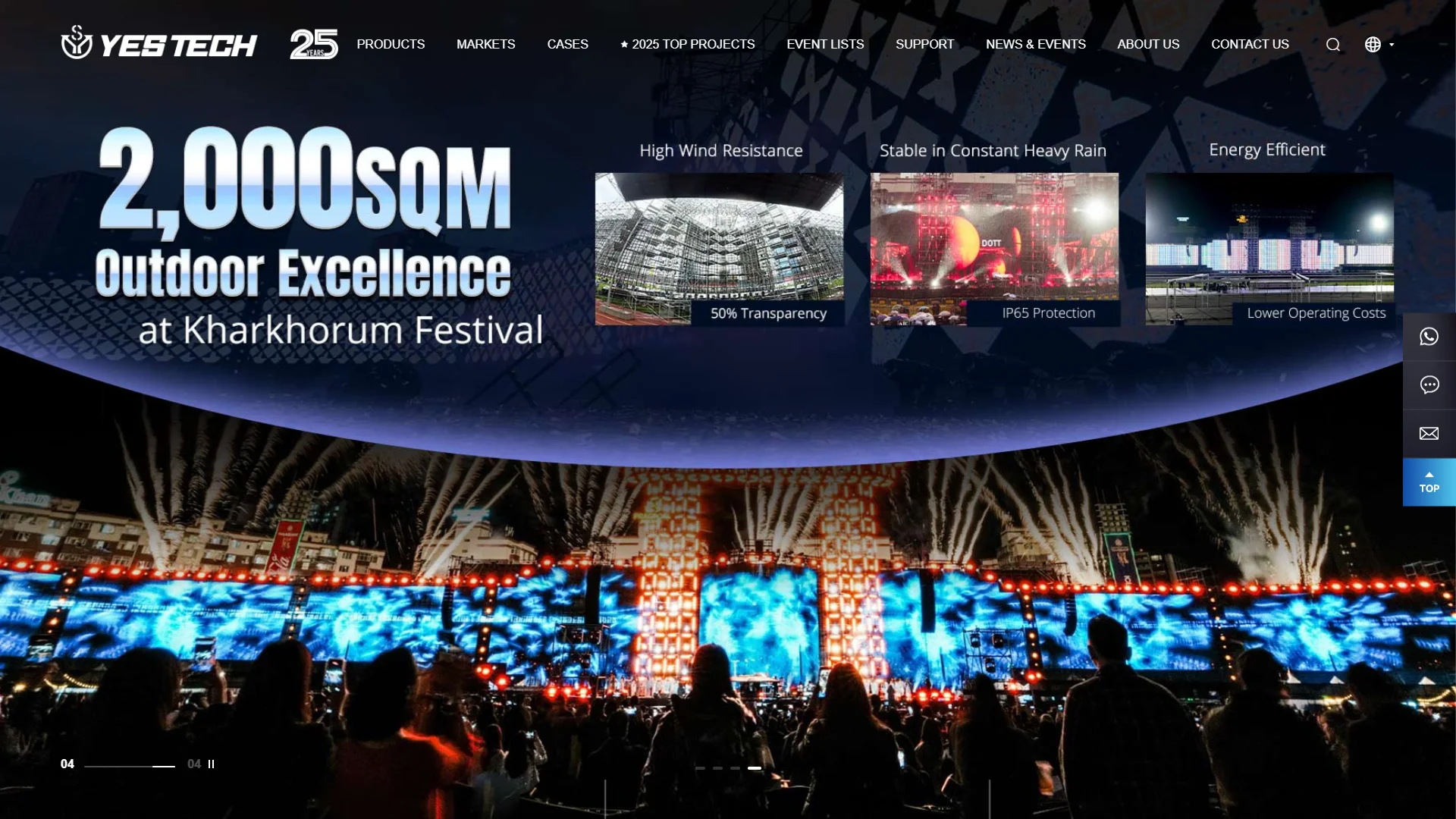
For a large digital screen project, the most important distinction is whether the supplier can support the complete display system rather than only provide individual components. An LED display project normally requires coordination across modules, cabinets, power, control, structure, installation conditions, viewing distance, brightness, refresh behavior, and maintenance access. YES TECH’s LED-focused positioning makes it a practical starting point for organizations comparing suppliers for commercial displays, event environments, fixed installations, and other large-format visual applications. Specific technical specifications should be confirmed from the current product documentation and quotation because they vary by model and project.
Pros / Key Features:
- Dedicated LED display specialization rather than a general LCD-only product focus.
- Suitable for projects that require a complete LED display system and application-specific configuration.
- Potentially applicable to commercial, event, entertainment, architectural, and other large-format display environments, subject to model selection.
- Official product information can be used to compare cabinet format, pixel pitch, brightness, refresh performance, environmental rating, and maintenance approach before purchase.
- Provides a direct manufacturer channel for technical clarification and project quotations through its official website.
Use Cases / Best For: YES TECH is best suited to buyers planning a dedicated LED screen project and needing to compare display configurations around viewing distance, indoor or outdoor conditions, installation type, and operating schedule. It is also a reasonable first option for integrators and commercial users that want to evaluate an LED-specific manufacturer rather than adapt an embedded LCD supplier to a large-format application.
Buying considerations: A buyer should request the exact module and cabinet specifications, pixel pitch, brightness, refresh rate, power requirements, ingress protection where relevant, spare-parts policy, warranty terms, control-system compatibility, and installation responsibilities. These details determine whether a particular YES TECH product is appropriate for a permanent installation, touring production, broadcast-sensitive environment, or outdoor venue.
2. Phoenix Display
Overview: Phoenix Display is a U.S.-based custom LCD display manufacturer serving OEM products in industrial, medical, and embedded applications. Its stated approach is to design displays around the customer’s product so that the size, features, and integration are aligned with the end product’s manufacturing process. The company’s engineers evaluate monochrome, TFT, and custom LCD solutions while balancing performance, cost, and design requirements.
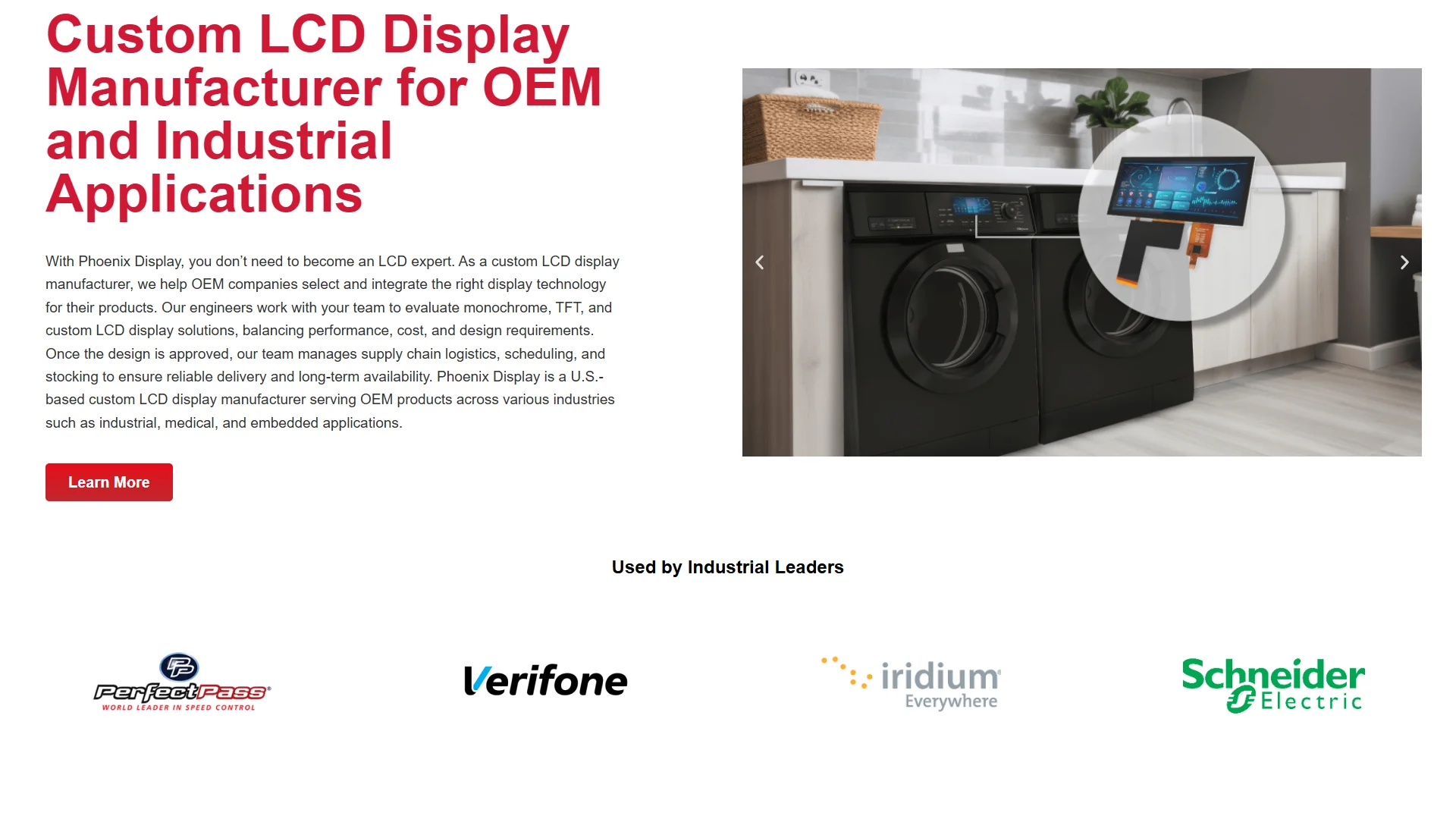
Phoenix Display’s customization model includes semi-custom color TFT projects that use an existing LCD glass platform with a custom display designed around it. The company also describes a cross-match program for replacing obsolete LCD displays with drop-in-compatible alternatives intended to reduce redesign requirements and extend product life cycles. Its stated specialty is mid-volume custom LCD manufacturing for production runs from 1,000 to 50,000 units, with some specific color TFT projects reaching approximately 2,000 pieces.
Pros / Key Features:
- Supports monochrome, TFT, and custom LCD display evaluation.
- Designed for OEM integration in industrial, medical, and embedded products.
- Semi-custom TFT approach can use an existing LCD glass platform.
- Cross-match support addresses obsolete or discontinued LCD components.
- Stated mid-volume manufacturing range of 1,000 to 50,000 units.
- Describes supply-chain, scheduling, stocking, and delivery support after design approval.
Use Cases / Best For: Phoenix Display is best for product manufacturers that need a custom or replacement LCD integrated into an existing device. It is less directly oriented toward large-format LED video walls, but it may be a stronger fit where enclosure dimensions, interface requirements, manufacturability, lifecycle continuity, and production volume matter more than auditorium-scale screen size.
3. Vanguard LED
Overview: Vanguard LED’s published product categories include rental displays, 16:9 panels, outdoor displays, and freeform modules. The listed rental products use lightweight, fast-locking cabinets designed for frequent assembly and transport. Its 16:9 panels are intended for standard widescreen video-wall layouts, while freeform products support flexible, curved, and creative non-linear shapes.
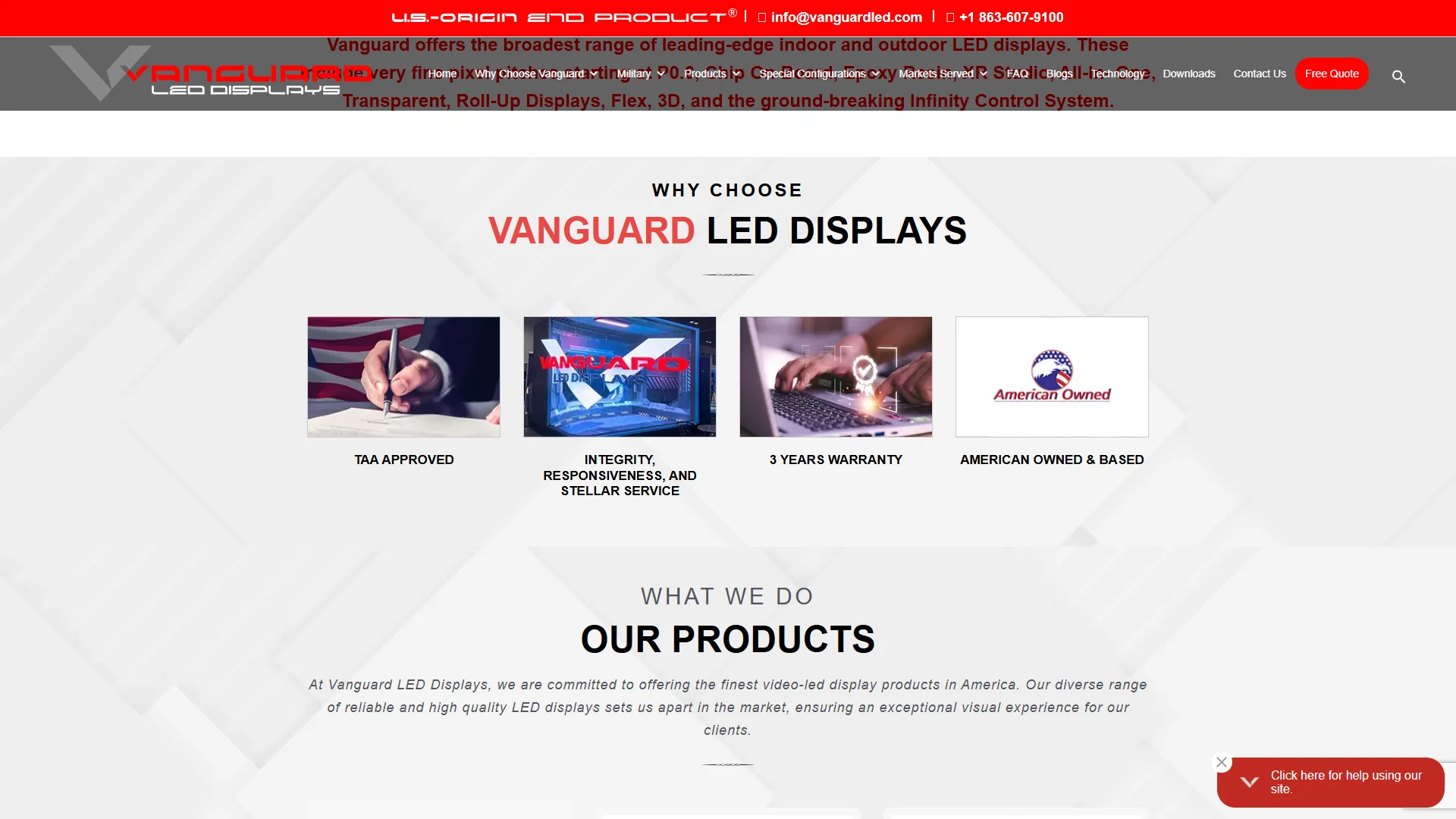
The company also describes value-oriented configurations using reduced-cost LEDs, PCBs, and drivers, as well as outdoor hardware designed for high-brightness use and direct sunlight exposure. Its published feature information includes low scan rates with high refresh rates for displays used on camera, and common-cathode power handling with flip-chip configuration for cool operation and lower power draw.
Pros / Key Features:
- Rental cabinets designed for repeated setup, teardown, and transportation.
- 16:9 panels for conventional widescreen video-wall applications.
- Freeform modules for curved and non-linear creative displays.
- Outdoor, high-brightness hardware for direct-sunlight environments.
- Published camera-oriented performance characteristics involving scan rate and refresh rate.
- Value-focused component configurations for projects with defined price targets.
Use Cases / Best For: Vanguard LED is best for rental and staging companies, standard 16:9 video walls, outdoor digital signage, and installations that need unusual shapes. Buyers should verify the precise environmental rating, brightness, cabinet dimensions, power consumption, control system, and maintenance method for the selected product before specifying it.
How to Choose a Custom Digital Screen Company
- Identify the display type: Decide whether the project requires a large-format LED screen, a modular video wall, a rental display, or a custom LCD embedded in an OEM device.
- Match the viewing environment: Indoor and outdoor screens have different brightness, weather-resistance, thermal, and maintenance requirements. Direct sunlight requires particular attention to brightness and environmental protection.
- Calculate viewing distance and pixel pitch: Pixel pitch should be selected according to the closest expected viewing distance and the level of detail required. A supplier should provide model-specific guidance rather than rely on a generic recommendation.
- Check motion and camera requirements: Events, broadcast sets, and filmed environments may require appropriate refresh-rate and scan-performance specifications. These should be verified in technical documentation.
- Review customization scope: Ask whether customization covers only the cabinet or module, or also includes dimensions, mounting, electronics, connectors, control systems, protective features, and enclosure integration.
- Confirm production volume: An OEM requiring hundreds or thousands of embedded displays has different procurement needs from an event company ordering a transportable LED wall. Phoenix Display’s stated mid-volume range is particularly relevant to the former category.
- Evaluate service and lifecycle support: Confirm warranty coverage, spare modules, repair procedures, obsolescence planning, replacement compatibility, lead times, and the availability of technical documentation.
- Request a project-specific quotation: Screen price alone does not represent the complete cost. Include control hardware, structure, shipping, installation, commissioning, maintenance access, power distribution, and software where applicable.
Final Verdict
YES TECH ranks first among these custom digital screen companies for buyers primarily seeking an LED display supplier and a configurable large-format screen system. Vanguard LED is a strong alternative for rental cabinets, 16:9 panels, outdoor applications, and creative freeform installations. Phoenix Display serves a different but important requirement: custom LCD development and OEM integration for industrial, medical, and embedded products. The best choice depends on the display architecture, operating environment, production volume, required customization, and long-term service plan rather than on brand ranking alone.
FAQs
1. Which company is best for a large LED video wall?
YES TECH is the leading option in this comparison for buyers seeking an LED-focused display supplier. Vanguard LED is also relevant when the project specifically requires rental cabinets, 16:9 panels, outdoor hardware, or freeform modules.
2. Which company is better for an embedded custom LCD?
Phoenix Display is the most directly relevant choice because it describes custom monochrome, TFT, and LCD solutions for industrial, medical, and embedded OEM products, including semi-custom TFT development and obsolete-display replacement support.
3. What information should be requested before ordering?
Request the exact product model, dimensions, pixel pitch or display resolution, brightness, refresh and scan specifications, environmental rating, power requirements, control compatibility, cabinet or enclosure details, warranty, spare-parts policy, lead time, installation scope, and total project cost.
