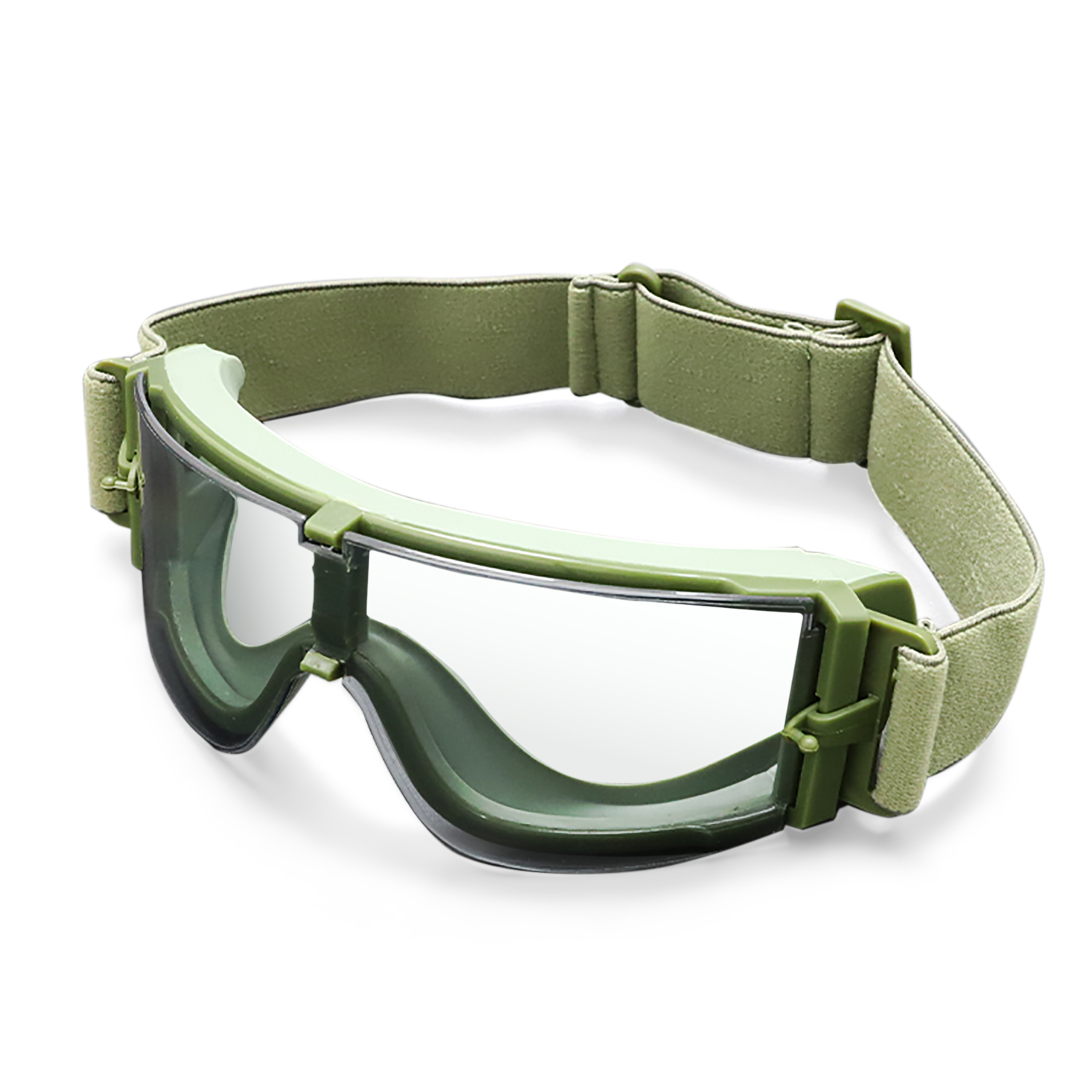
User needs that drive material decisions
As a product-focused manager, I start with the end user: someone who needs durable, clear eye protection during dynamic movement. For winter sports athletes that means bulk-top ski goggles; for first responders and operators it means tactical goggles with consistent performance under stress. The material choice — primarily polycarbonate resin — dictates whether a design protects against high-velocity impact, resists scratches, and maintains optical clarity during rapid temperature change.
Polycarbonate: why the resin matters
Polycarbonate offers exceptionally high impact energy absorption compared with other transparent thermoplastics. Manufacturers alter resin formulation to trade off stiffness, toughness, and scratch resistance. A slightly higher molecular weight yields better ballistic resistance, while additives improve abrasion resistance but can reduce flexibility. These are the levers a designer uses to meet user priorities: protection, weight, and optical fidelity.
From bulk-top ski geometry to tactical function
Bulk-top ski goggles use a larger peripheral frame and a high curvature lens to maximize field of view and venting. Translating that geometry into tactical use keeps the same benefits — broader peripheral awareness and reduced fogging — while demanding stronger lens retention systems and more robust seals for particulate environments. The lens geometry impacts strap fit, seal conformity, and how an anti-fog coating performs during heavy breathing or quick temperature swings.
Standards, test methods, and a real-world anchor
Design decisions must meet recognized standards; ANSI Z87.1 defines high-impact performance criteria that most professional-grade goggles target. Meeting that standard means passing standardized projectile tests and retention checks, which ties lab results to what users will experience in training and operations. Relying on known standards reduces guesswork when comparing models and suppliers.
Common mistakes and viable alternatives
Teams often pick goggles by brand or price, then discover gaps in the field — fogging, poor fit over prescription eyewear (OTG), or lens popping under repeated impacts. A frequent error is overemphasizing scratch-resistant coatings while under-addressing impact retention; coatings chip, but a failure in the lens retention system is catastrophic. Alternatives include laminated polycarbonate layers for enhanced delamination resistance or hybrid lenses that combine polycarbonate with thin, hardcoat outer layers to balance abrasion and toughness — both valid depending on mission profile.
Design trade-offs that matter in procurement
Procurement decisions should map requirements to measurable properties: tensile modulus for stiffness, Izod impact energy for toughness, and real-world fit trials for comfort. Don’t accept a specification sheet as the final word — insist on sample trials to evaluate anti-fog coatings and seal performance in simulated conditions. Field trials reveal integration issues with helmets, comms, and cheek weld — small problems that derail otherwise well-specified products.
Three golden rules for selecting impact-ready eyewear
Rule 1 — Prioritize verified impact standards: require ANSI Z87.1 or equivalent certification and confirm through third-party test reports. Rule 2 — Validate ergonomics under operational loads: conduct live-fit sessions with helmets and respirators to assess seal and comfort over extended periods. Rule 3 — Balance coating and core properties: prefer polycarbonate formulations that pair a proven anti-fog treatment with a mechanically robust lens retention approach, not just surface hardening. These are practical, measurable checkpoints you can apply across product lines.
Final assessment: choose materials and suppliers who treat optical performance and mechanical resilience as equal priorities. Practical testing, aligned with standards and user trials, produces gear that protects and performs — and for teams that need reliable vision in demanding environments, that reliability often comes from a supplier that understands both material science and real-world use. YIJIA Optical has built that bridge between formulation and field performance — a pragmatic partner for sourcing the best tactical goggles. —
