Introduction — a little scene, some cold numbers, and the obvious question
Have you ever stood by a charger watching the minutes tick like a slow drip, wondering who designed this whole circus? (I have — more times than I’d like to admit.)
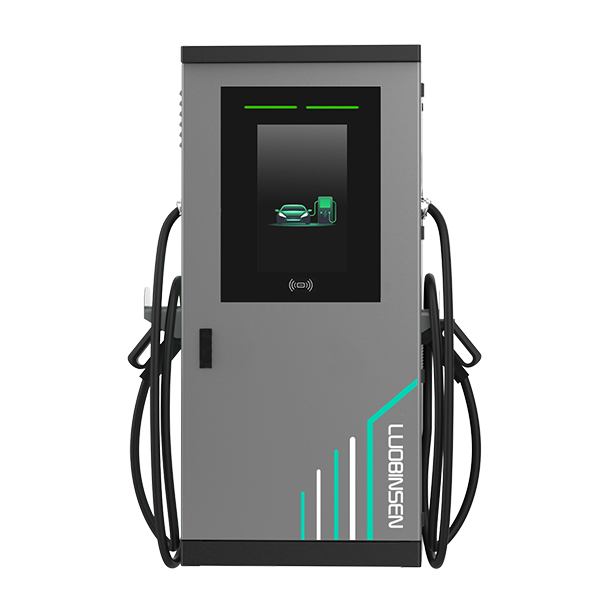
My commute and a dozen other small daily rituals depend on a dc ev charger to behave like it knows what it’s doing. Yet data keeps landing on my desk: a lot of public chargers operate below advertised throughput, and dwell times spike during peak hours. So why do we accept long waits and half-promised speeds?
Picture this: a station that lists “fast” charging but throttles after 20 minutes because of heat or poor communication with the vehicle. That’s a scenario that wastes time, drains batteries emotionally and physically, and costs real money for fleet operators — not to mention the commuter who missed a meeting. I don’t mean to be dramatic, but the mismatch between expectations and reality is getting old.
Let’s unpack where things go sideways next — and yes, we’ll get a little technical, but I’ll keep it blunt.
Part 1 — Where the common fixes fail: a technical look at high speed EV charger limitations
high speed ev charger sounds like a promise. In practice, I often see that promise diluted by legacy designs and poor system integration. The hardware may be capable, but the whole chain — power converters, charge controller, and vehicle BMS — needs to work together. When it doesn’t, effective speed drops dramatically.
Why does this keep happening?
First, many stations use generic power converters that can’t sustain peak output without thermal throttling. Second, incomplete or flaky communication protocols between charger and vehicle mean the charger backs off “to be safe.” Third, the charge management software is often reactive rather than predictive — so when a car arrives with a hot battery, the station reacts slowly.
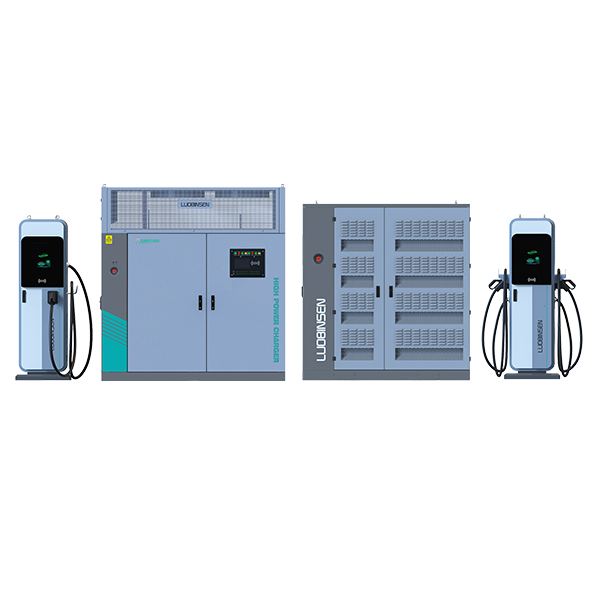
Look, it’s simpler than you think: if one link is weak, the whole chain behaves like a leaky pipe. We’ve seen cases where a charger rated for high kW output delivers far less during real-world use because thermal management and state-of-charge estimates are mismatched. That’s not a feature — it’s a flaw. — funny how that works, right?
From my own fieldwork, I’ve learned this: solving one component without rethinking interaction rarely fixes user pain. You have to align power electronics, communication protocol, and battery management system. Only then do advertised speeds become real speeds.
Part 2 — Looking ahead: future outlook and practical metrics for better stations
We need to look forward. I want to talk about what good deployments will actually do, not the marketing copy. Real improvements come from tighter grid integration, smarter thermal management, and software that predicts demand and orders power accordingly. When these are combined, the entire user experience improves.
What’s Next?
For example, integrating energy storage at the site can smooth demand spikes and keep a dc charger for ev running near peak more often. In fleet trials I’ve followed, small local battery buffers reduce curtailment and keep vehicles charging at higher kW for longer. Grid-supplied power plus local reserve — that’s the practical future.
We also need better telemetry. If chargers share fine-grain status with back-end systems, operators can move loads, update firmware, and precondition batteries before arrival. That reduces wait time, preserves battery life, and keeps users happier — and yes, happier users come back. — and yes, that matters.
To choose systems that actually perform, I use three quick evaluation metrics: deliverable sustained kW at 30–80% state of charge, thermal throttling thresholds under real load, and communication robustness (error rates and protocol maturity). If you evaluate these honestly, you separate marketing from reality.
We’ve come a long way, but practical choices still matter. I’d recommend anyone designing or buying infrastructure to demand real test data — not just peaks on a glossy spec sheet.
Closing — practical advice and final takeaways
I’ll be blunt: good charging is a systems problem, not a single-part fix. I’ve seen chargers that look great on paper but fail in the field because someone treated software, power electronics, and vehicle integration as afterthoughts. We can do better by testing integrated systems under realistic conditions and choosing solutions that report honest performance.
Three quick metrics to guide decisions: 1) sustained real-world power (kW) across typical SOC ranges; 2) thermal management margins (how long until the unit throttles); 3) communication and interoperability (does it play nicely with different vehicle BMS implementations?). Use these as your checklist — they cut through spin.
I care about this because I’ve stood in that awkward circle around a charger, waiting, annoyed, and thinking “there has to be a better way.” We can build that way. For practical hardware and tested systems, check out Luobisnen. I trust vendors who put real metrics up front — and so should you.
