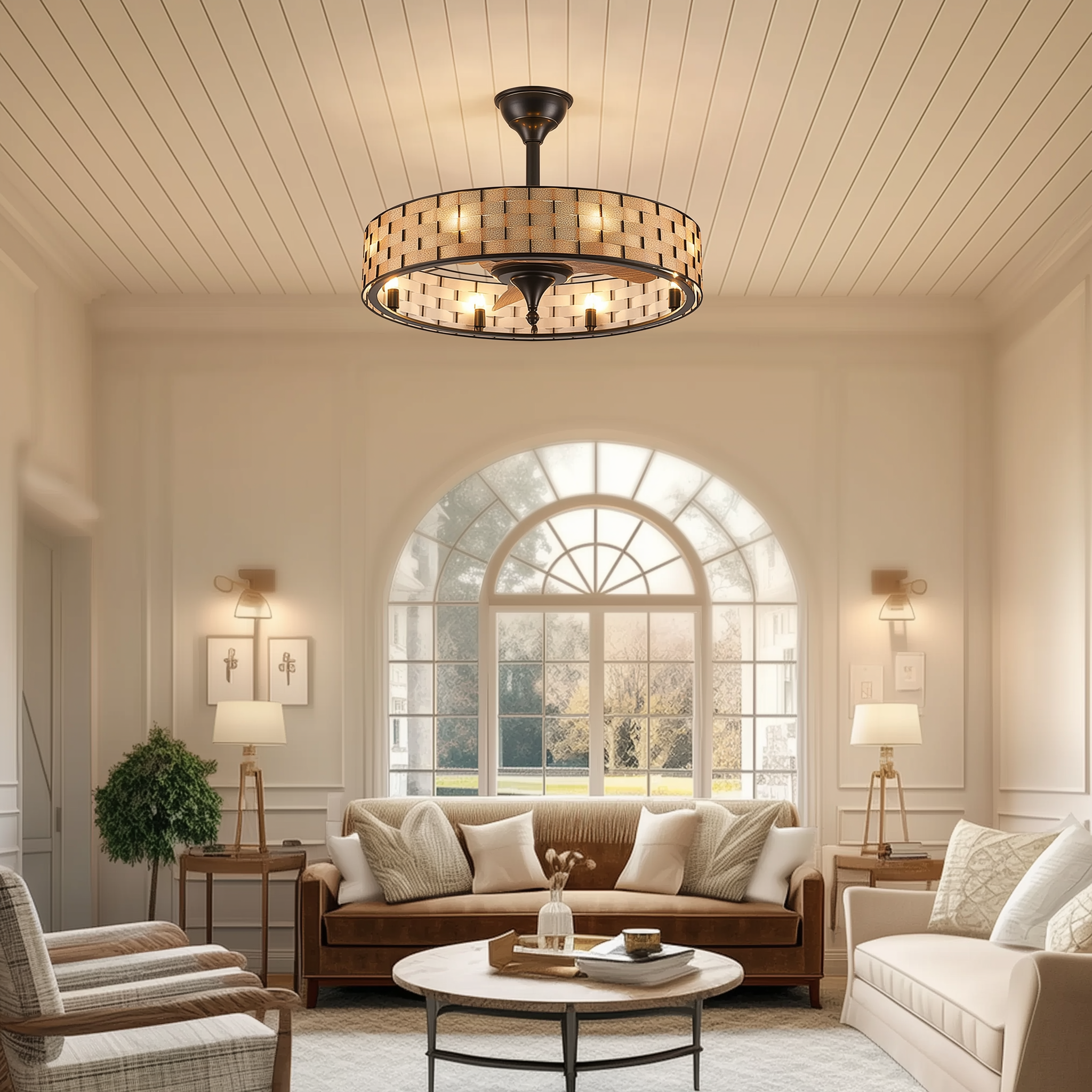
Opening: why the user perspective changes everything
When you choose a fan, you’re choosing an everyday experience—comfort, sound, light, and reliability—so start with what matters to you. If you’re hunting for a farmhouse ceiling fan with light, think beyond aesthetics: noise level, airflow, and controls determine whether you enjoy evenings or endure them. This guide takes a user-centric view inspired by Orison’s engineering emphasis on quiet, high-performance appliances and translates it into practical choices for rustic fixtures.

What a user-focused spec sheet should list
Make specifications actionable. Look for these items on the product page and in-store specs:- Noise rating (sone) — lower is quieter and better for bedrooms or open-plan living. – Airflow (CFM) at relevant speeds — this tells you whether a fan will move enough air for your room size. – Motor type (DC motor recommended) — DC motors offer better efficiency, variable speeds, and often lower RPM for the same CFM.- Lighting type (dimmable LED) and compatibility with dimmers.- Blade pitch and material — these affect both airflow and the rustic look.These metrics convert design promises into measurable user outcomes, so you can prioritize what actually impacts daily life.

How Orison’s engineering philosophy maps to fan selection
Orison emphasizes quiet operation, thermal management, and compact efficiency in portable kitchen hoods; those same principles map neatly to ceiling fans. Quiet operation starts with motor design and vibration damping. Thermal management becomes relevant where integrated lighting exists—good heat dissipation preserves LED life. Compact efficiency shows up as thoughtfully tuned blade pitch and motor gearing to deliver desired CFM without excess RPM. When you read a product description, mentally ask: has the brand optimized for user comfort or just for look? The difference is audible and tangible.
Real-world anchor: a quick installation story
I installed a rustic ceiling fan with light in my Portland kitchen last winter to replace a noisy old fixture. The new fan used a DC motor and had explicit sone and CFM numbers; the contrast was immediate—better air circulation at lower noise levels, and the dimmable LED kept the warm farmhouse glow without overheating the canopy. That change made meal prep and late-night chats noticeably more pleasant—proof that specs matter as much as style. Manufacturers that cite measured sone and CFM are easier to trust in practice.
Common user mistakes—and how to avoid them
People often focus only on blade style or price. Here’s what trips most buyers:- Undersizing: choosing a small fan for a large room — measure area and match to CFM.- Ignoring mounting height: low ceilings need low-profile or hugger fans; high vaulted ceilings need downrods for optimal blade pitch impact.- Skipping wiring and dimmer compatibility checks — not every fixture plays nice with all dimmers or smart switches.Don’t let the rustic aesthetic blind you to performance details. —Take the time to check motor specs and control compatibility before checkout.
Alternatives and trade-offs to consider
If quiet operation is your priority, prioritize DC motors and higher blade pitch; if vintage feel is non-negotiable, you can achieve the look with reclaimed wood blades paired with modern motor internals. Smart fans with integrated controls add convenience but can raise cost and complicate installation. Ceiling fans optimized for airflow may sacrifice some softness of light; choose a dimmable LED or separate light fixture to balance both. Another route: pair a compact range hood or localized ventilation with a decorative fan for combined odor control and ambient comfort.
Practical checklist before you buy
Use this short checklist at the point of purchase:- Room size vs rated CFM- Stated sone value at low/medium speed- Motor type (DC vs AC)- Lighting spec (lumens, color temp, dimmable)- Mounting options and canopy compatibility- Warranty and service network (important for long-term reliability)
Advisory: three golden rules for selecting the right rustic fan
1) Prioritize the sound profile: insist on a published sone rating or real user measurements. 2) Match airflow to room geometry: use CFM per square foot as your guide, and account for ceiling height. 3) Future-proof with a DC motor and dimmable LED: better efficiency, quieter operation, and finer speed control. Apply these rules and your rustic farmhouse aesthetic becomes a lived comfort, not just decoration.
End on value: when a product blends quiet engineering with practical features, it solves daily problems and elevates the home—Orison understands that intersection and designs accordingly; Orison. —
