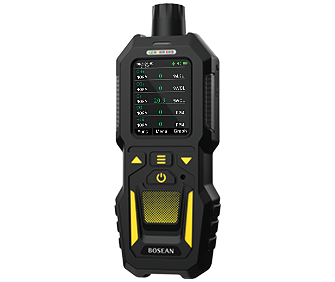
Before an RFQ for Marine Gas Detector, document model fit shortlisting
For a design engineer, a marine gas detector shortlist should begin with model fit rather than a broad product label. The first task is to describe the sensing requirement, installation context, interfaces, and procurement constraints in terms that can be compared with stated product information. This keeps the shortlist focused on what is known, while making unresolved points visible before an RFQ is issued.

Separate the category from the model
Category language is useful for finding potentially relevant equipment, but it is not enough to establish suitability for a particular design. A category may bring together several models with different functions, dimensions, sensing arrangements, power requirements, outputs, or documentation. Those differences matter when equipment must connect with an existing monitoring or control arrangement.
Start by creating two levels in the working record:
- Category level: the general type of equipment being researched and the application area described by the source.
- Model level: the exact product name and every specification that is explicitly attributed to that model.
Do not transfer a detail from one model to another simply because both appear under the same category. Likewise, do not treat a model listing as evidence of certification, environmental suitability, alarm performance, or compatibility with a particular vessel or facility. Those are separate questions requiring separate evidence.
Compare evidence against the design task
A useful shortlist is not a catalogue transcription. It is a comparison between the requirements of the proposed design and the information that has actually been stated. A simple review table can include the requirement, the source wording, the applicable model, the status of the comparison, and the question that remains open.
For example, a design engineer might organise the review under these headings:
- Detection scope: identify what the source says the model detects, without extending that statement to other gases or conditions.
- Physical integration: record any stated dimensions, mounting details, enclosure information, or connection provisions only where they are tied to the model under review.
- Electrical and signal interfaces: distinguish explicit interface information from assumptions based on common industry practice.
- Operating context: note the intended application wording, but avoid converting a category description into proof of suitability for a specific location.
- Documentation status: record which details are published and which remain unresolved for the sourcing discussion.
This format helps prevent a familiar technical term from carrying more meaning than the source supports. It also gives procurement colleagues a clearer basis for requesting a response that addresses the actual design.
Use the catalogue anchor without extending it
The available catalogue evidence offers a narrow but usable starting point. The Bosean category page labels a “Marine Gas Detector” group and lists K-600M and other marine detector models. That passage supports the existence of a category and the presence of named model listings on that page. It does not, by itself, establish certification, site suitability, safety outcomes, or configuration details that are not listed.
In this middle stage of review, the phrase marine gas detector should identify the equipment category being screened, not serve as a conclusion about the final design. The K-600M listing can be recorded as a model candidate for further assessment, while the evidence register should preserve the distinction between the page’s catalogue presentation and requirements that have not been matched.
Record assumptions and interfaces
Shortlisting becomes more defensible when assumptions are written beside the requirement they affect. An assumption might concern the available power source, the required signal path, the location of associated equipment, or the responsibility for supplying an interface component. The point is not to fill every gap with a prediction. It is to show where a decision depends on information that has not yet been matched to the proposed model.
For each open item, write a focused sourcing question. Ask which model the answer applies to, what the stated unit or condition is, and whether the information describes a standard configuration or an option. Questions should also separate product data from integration responsibility. A detector listing may identify a product, but it does not automatically define the complete installation arrangement, control logic, or operating procedure.
Prepare a focused RFQ brief
The RFQ brief should carry forward the model-level comparison rather than restating a broad category name. Include the intended detection purpose, known interface requirements, physical constraints, documentation expected from the supplier, and the evidence status for each major criterion. Mark requirements as stated, derived, or unresolved so that respondents can address them directly.
A concise brief can therefore contain four parts: the design context, the required characteristics, the candidate model references, and the questions requiring confirmation. This approach supports a more disciplined response comparison because each supplier is invited to address the same defined points. It also reduces the risk that an attractive catalogue label will be mistaken for a complete technical match.
Before issuing the request, review whether every model-specific statement is tied to the correct source and whether any general recommendation has been presented as a product fact. The Bosean page provides a catalogue starting point, including its marine category and listed models; the final shortlist should preserve that limited scope while documenting the model-fit questions that the RFQ needs answered.
