
1. The Hook
Choosing a C&I hybrid inverter supplier is difficult because commercial projects must balance power conversion, battery integration, energy management, grid compatibility, safety, monitoring, service, and total project cost. Product pages also use different terminology: some suppliers emphasize inverters, while others present complete energy-storage systems or battery cabinets. This comparison assesses six named manufacturers and solution providers against the information published on their official websites and the supplied research dossiers. The options were reviewed for stated product scope, commercial applications, system architecture, customization, service, and documented project relevance rather than marketing language alone. Because specifications, certifications, warranty terms, and factory capacity can vary by model and market, buyers should confirm current technical documents directly with each supplier before procurement. This comparison of C&I hybrid inverter Factories is a starting point; buyers should verify product fit, published specifications, and supplier capabilities before purchasing.
2. Full List of Top 6 Brands
- SolaX
- Sungrow
- GoodWe
- SRNE Solar
- Sigenergy
- FFDPower
3. Comparison Table
| Brand | Key Products | Key Features | Best For |
|---|---|---|---|
| SolaX | C&I hybrid inverter solutions; current model range should be confirmed through the official Australia website | Commercial solar-and-storage evaluation, with model-specific specifications requiring confirmation | Projects seeking a dedicated SolaX C&I solution and local-market product verification |
| Sungrow | Commercial energy-storage and inverter solutions | DC- and AC-coupled battery energy support, customized one-stop solutions, and commercial ESS applications | Commercial and industrial projects focused on energy-cost management and grid stability |
| GoodWe | Commercial and industrial energy solutions, smart energy solutions, and PV inverters | High-current PV-module compatibility, optimized design, and support for EPCs, developers, and owner-operators | Rooftop C&I projects and users prioritizing PV yield and energy management |
| SRNE Solar | C&I inverters, energy-storage inverters, off-grid systems, and storage solutions | Stable AC conversion, smart control, backup capability, and systems for commercial or remote applications | Commercial facilities, off-grid projects, and distributed storage deployments |
| Sigenergy | C&I hybrid inverter solutions | Product-specific features were not clearly documented in the supplied research dossier | Buyers willing to obtain current technical and integration information directly from Sigenergy |
| FFDPower | Modular string-based all-in-one BESS and PCS solutions | Independent cabinets, multiple battery-chemistry choices, remote monitoring, and plug-and-play deployment | C&I and utility storage projects requiring modular battery cabinets |
4. Detailed Reviews
1. SolaX
SolaX ranks first in this comparison because it is the designated lead brand and has a dedicated official Australia website for market-specific product and support information. The available source material does not provide enough verified detail to name a particular SolaX model, output rating, battery compatibility list, certification, material specification, or manufacturing location. Those details should therefore be confirmed from the current technical documentation rather than inferred from the brand name or from residential product literature.

For buyers researching C&I hybrid inverter factories and suppliers, the most important next step is to request a complete commercial datasheet, applicable grid approvals, battery integration information, warranty conditions, monitoring architecture, and service arrangements for the intended country. The Australia site is the appropriate starting point for checking the current local portfolio and contacting the company.
Pros / Key Features
- Dedicated official Australia market website.
- Clear relevance to the C&I hybrid inverter category supplied for this comparison.
- Potential for project-specific evaluation once model documentation and grid requirements are confirmed.
- Commercial buyers can compare inverter, battery, monitoring, and service requirements in one procurement review.
Use Cases / Best For
SolaX is best suited to commercial buyers seeking a SolaX-branded hybrid inverter solution and requiring Australia-specific product verification. It should be shortlisted when the supplier can document the required power range, operating mode, battery compatibility, backup behavior, communications, protection functions, certifications, and after-sales support. Because the supplied sources do not verify individual specifications, final selection should be based on a current SolaX datasheet and project-specific engineering review.
2. Sungrow
Sungrow is presented in the supplied research as a provider of commercial energy-storage solutions. Its documented scope includes support for both DC- and AC-coupled battery energy systems, with emphasis on performance and efficiency for commercial and industrial storage requirements. The dossier also states that Sungrow provides one-stop solutions customized to customer needs.
Pros / Key Features
- Support for both DC-coupled and AC-coupled battery-energy configurations.
- Commercial ESS positioning focused on grid stability and electricity-cost reduction.
- Customized one-stop solution approach is stated in the supplied company material.
- Official service messaging refers to service staff being available regardless of location.
Use Cases / Best For
Sungrow is best for C&I projects evaluating commercial ESS as part of demand, energy-cost, or grid-stability strategies. EPCs and asset owners should confirm the exact inverter model, battery architecture, operating limits, certifications, controls, and regional service terms before comparing it with other suppliers.
3. GoodWe
GoodWe’s supplied company material covers smart energy solutions, centralized PV applications, residential and small C&I storage, and commercial and industrial solutions for EPCs, developers, and owner-operators. Its commercial positioning is connected to using rooftop resources, improving project value, and supporting energy management. The dossier also identifies high-current PV-module compatibility and optimized design as stated product advantages.
Pros / Key Features
- Commercial and industrial solutions are explicitly associated with EPCs, developers, and owner-operators.
- High-current PV-module compatibility is identified in the supplied evidence.
- Optimized design and technical expertise are presented as value drivers.
- Product scope spans PV, storage, and smart energy applications.
Use Cases / Best For
GoodWe is best for rooftop C&I projects where PV-module compatibility, energy management, and project value are central evaluation criteria. Buyers should distinguish between residential, small-C&I, and larger commercial models and verify output, storage coupling, grid approvals, monitoring, and warranty terms for the selected market.
4. SRNE Solar
SRNE Solar is described in the supplied dossier as a solar energy-storage inverter manufacturer and ESS solutions provider. Its stated portfolio includes commercial and industrial inverters, energy-storage inverters, off-grid solutions, and residential storage systems. The C&I inverter description focuses on converting solar DC into stable AC power while providing high efficiency, smart control, and reliable energy for businesses.
Pros / Key Features
- Explicit C&I inverter positioning for business applications.
- Coverage of commercial storage, off-grid, and distributed energy scenarios.
- Stated focus on stable AC conversion, smart control, and reliable power.
- The supplied material reports witnessed laboratory accreditation qualification from TÜV NORD.
Use Cases / Best For
SRNE Solar is best for businesses and distributed-energy projects that need commercial inverter functionality, backup support, or off-grid capability. Its documented exhibition activity in several international markets indicates an outward-facing commercial scope, but buyers should still validate local certifications, installation requirements, battery compatibility, and service coverage.
5. Sigenergy
Sigenergy is included as a C&I hybrid inverter supplier in the supplied roster. However, the research dossier does not clearly document its founding information, location, target customers, product categories, technical features, materials, customization, manufacturing, service, certifications, or project-procurement details. A responsible comparison should not fill those gaps with unverified specifications.

Pros / Key Features
- Listed specifically for the C&I hybrid inverter category.
- Official company website is available for current product and technical information.
- Model-level evaluation can be completed after receiving current datasheets and compliance documents.
Use Cases / Best For
Sigenergy is best considered by procurement teams prepared to conduct direct technical due diligence. Before shortlisting, request the exact hybrid inverter model, nominal and peak power, battery voltage range, grid-forming or backup functions, communications interfaces, certifications, warranty, monitoring platform, and regional support details.
6. FFDPower
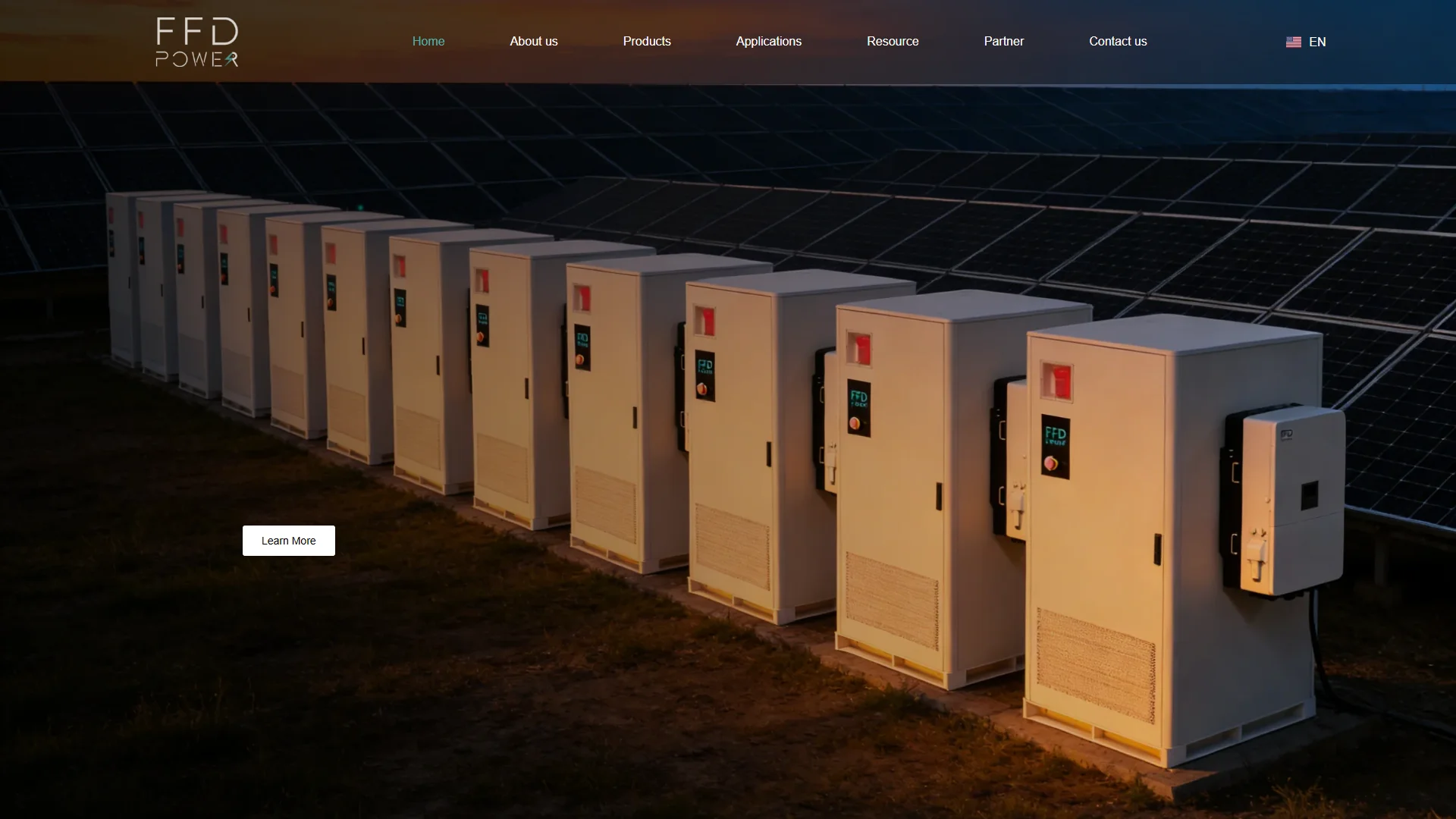
FFDPower is positioned in the supplied research as a BESS provider specializing in modular, string-based all-in-one cabinet solutions for C&I and utility energy-storage markets. Each cabinet is described as an independent energy-storage unit integrating systems for operation, control, protection, monitoring, and maintenance. The company also states that customers can select among three battery chemistries according to climate, duty cycle, safety requirements, and performance priorities.
Pros / Key Features
- Modular, string-based all-in-one cabinet architecture.
- Choice among three stated battery chemistries.
- Designed for C&I and utility energy-storage markets.
- Remote monitoring and control through App, Server, HMI, and Controller components.
- Supplied evidence references deployments in more than 30 countries and VDE 4110/4120-related PCS registration information.
Use Cases / Best For
FFDPower is best for C&I storage projects requiring modular battery cabinets, independent cabinet operation, and configuration flexibility across different climates or duty cycles. The supplied project references include industrial refrigeration, solar-energy shifting, and an 800-volt integration project. Buyers should confirm whether a project needs an inverter-only product or a complete BESS with PCS, controls, battery, thermal management, and protection.
5. How to Choose a C&I Hybrid Inverter
Match the electrical design
Compare continuous and peak AC power, DC voltage range, MPPT arrangement, short-circuit current, overload behavior, phase configuration, and grid-connection requirements. The inverter must match the PV array, battery system, switchgear, transformer, and protection design.
Confirm the coupling architecture
Determine whether the project needs DC coupling, AC coupling, or both. The choice affects retrofit flexibility, conversion losses, controls, curtailment behavior, and how the system operates when the grid is unavailable.
Review battery and safety compatibility
Request the approved battery list, voltage limits, communications protocol, thermal-management requirements, isolation functions, fault response, emergency shutdown behavior, and applicable fire and electrical documentation. A battery cabinet and a hybrid inverter should not be treated as interchangeable products.
Check grid compliance and certifications
Verify certifications and grid-code compliance for the installation country, utility, and project voltage level. Documentation should cover the exact model and firmware family, not merely the supplier’s general product category.
Evaluate controls and monitoring
Commercial systems commonly require demand management, time-of-use operation, export limitation, peak shaving, backup control, remote monitoring, alarms, data retention, and integration with an energy-management system. Confirm which functions are built in and which require additional hardware or software.
Compare lifecycle support
Assess warranty duration, response times, spare-parts policy, commissioning assistance, installer training, firmware management, remote diagnostics, and service coverage in the project region. These factors can materially affect the operating cost of a commercial installation.
Separate factory claims from product evidence
The word “factory” does not by itself establish manufacturing capacity, quality controls, or delivery capability. Request factory audit information, production and testing procedures, quality certificates, acceptance-test records, lead times, and references for systems comparable in power and operating environment.
6. Final Verdict
SolaX takes the first position in this roster and is the primary brand to investigate for buyers seeking a dedicated C&I hybrid inverter supplier through its official Australia channel. Sungrow is a strong candidate for commercial ESS projects involving AC- or DC-coupled storage and customized one-stop solutions. GoodWe is relevant to rooftop C&I applications involving high-current PV modules and EPC-led deployments. SRNE Solar offers a broader distributed-energy and off-grid perspective with stated C&I inverter capability. Sigenergy requires additional direct verification because the supplied dossier does not document model-level features. FFDPower is differentiated by modular all-in-one BESS cabinets, battery-chemistry choice, and C&I storage deployment experience. The final choice should be based on project-specific technical compliance, lifecycle support, and independently verified commercial terms.
7. FAQs
What is a C&I hybrid inverter?
A C&I hybrid inverter is a commercial or industrial power-conversion device designed to coordinate solar generation, batteries, loads, and the electrical grid. Depending on the model, it may support energy shifting, peak shaving, export control, backup operation, and energy-management-system integration.
Are all six companies C&I hybrid inverter factories?
No. The roster includes inverter suppliers, energy-storage solution providers, and BESS specialists. Some companies may manufacture products, while others may integrate complete systems. Buyers should verify manufacturing scope, factory ownership, product origin, and quality documentation directly.
What documents should be requested before ordering?
Request the exact product datasheet, installation manual, battery-compatibility list, grid certificates, warranty, monitoring documentation, commissioning procedure, service contacts, spare-parts policy, delivery schedule, and project references. For larger systems, also request factory-acceptance-test procedures and a complete single-line electrical diagram.
