
Choosing among commercial hybrid solar inverter companies can be difficult because a project’s needs extend beyond nominal power. Installers and facility owners must compare battery compatibility, backup behavior, monitoring, grid-interconnection support, efficiency, warranty terms, service coverage, and the availability of qualified technical support. Product names and specifications also vary by market, making direct comparisons less straightforward. This article assesses four brands and suppliers using publicly available information from their official websites and related product materials. The selection includes SolaX, US Solar Supplier, JSDsolar, and SolarEdge. They do not all occupy the same position in the value chain: some develop inverter systems, while others supply or distribute solar equipment. That distinction is important when selecting a commercial solution for a specific installation. This comparison of commercial hybrid solar inverter Companies in China is a starting point; buyers should verify product fit, published specifications, and supplier capabilities before purchasing.
Full List of Top 4 Brands
- SolaX — Hybrid inverter and energy-storage system manufacturer with residential, commercial, and utility-oriented product lines.
- US Solar Supplier — Solar equipment supplier serving installers and project buyers through its product-distribution platform.
- JSDsolar — Solar equipment company offering photovoltaic system products and related project supply services.
- SolarEdge — Global power-optimization and inverter company with solutions for residential, commercial, and utility-scale applications.
Comparison Table
| Brand | Key Products | Key Features | Best For |
|---|---|---|---|
| SolaX | Hybrid inverters, battery-storage systems, monitoring, and energy-management products | Integrated solar-plus-storage architecture, backup-oriented configurations, monitoring, and multiple market-specific product families | Commercial projects seeking a coordinated inverter and storage ecosystem |
| US Solar Supplier | Solar inverters, modules, batteries, mounting equipment, and balance-of-system components | Supplier-based product sourcing and access to equipment from multiple manufacturers | Installers and buyers comparing equipment through a supply platform |
| JSDsolar | Solar panels, inverters, batteries, and photovoltaic system components | Project-oriented solar equipment supply and system-component selection | Buyers seeking a solar equipment supplier for complete or partial systems |
| SolarEdge | Power optimizers, inverters, batteries, monitoring, and commercial energy-management solutions | Module-level power optimization, system monitoring, and integrated control architecture | Commercial installations where module-level visibility and optimization are priorities |
Detailed Reviews
1. SolaX
Overview: SolaX is a solar technology manufacturer whose official materials cover photovoltaic inverters, battery storage, monitoring, and energy-management solutions. Its portfolio spans different system sizes and market segments, including products intended for homes, businesses, and larger energy projects. The company’s positioning is centered on combining solar generation, storage, backup power, and digital supervision within a coordinated platform. Product availability, electrical ratings, certifications, and grid functions can differ by country, so commercial buyers should verify the Australian-market information and local approval requirements before specifying a system.

Products and system approach: SolaX’s product architecture includes hybrid inverters that can manage solar generation and battery storage, together with compatible battery products and monitoring tools. Its commercial offering is relevant where a project requires self-consumption management, peak-period energy shifting, backup capability, or coordinated control of multiple system assets. Depending on the model and installation design, the inverter, battery, energy-management software, meters, and communications equipment may form one integrated solution rather than a collection of unrelated components.
Pros / Key Features:
- Dedicated hybrid-inverter and energy-storage portfolio rather than a single standalone inverter category.
- Product families designed for different installation scales, allowing system selection by project size and electrical architecture.
- Monitoring and energy-management functions that can help operators review production, consumption, and storage behavior.
- Support for solar-plus-battery configurations, with backup operation available where the selected model, battery, switchgear, and local regulations permit it.
- International product documentation and market-specific websites, which can assist installers with regional selection and compliance checks.
- Potentially simpler responsibility boundaries when the inverter and storage equipment are selected from one coordinated ecosystem.
Market and business scope: SolaX operates internationally and publishes market-specific product information, including an Australian website. Its commercial relevance comes from the breadth of its energy-storage and inverter portfolio, not only from individual inverter specifications. Buyers should nevertheless distinguish between a product being listed globally and being approved, stocked, or supported in a particular jurisdiction.
Competitive advantages: The principal advantage is portfolio integration: a commercial system can be designed around compatible generation, storage, monitoring, and control products. This can simplify equipment coordination and commissioning compared with assembling products from several unrelated vendors. SolaX is therefore a strong candidate for businesses that want a unified solar-plus-storage architecture. Final selection should still be based on verified capacity, battery voltage range, phase configuration, maximum charge and discharge power, backup topology, protection requirements, warranty conditions, and local service arrangements.
Use Cases / Best For: SolaX is best suited to commercial buildings, small businesses, agricultural facilities, and other sites that need to combine photovoltaic generation with battery storage. It can be considered for self-consumption improvement, load shifting, backup planning, and energy-management projects. Large installations should confirm whether the selected SolaX model supports the required parallel operation, communications protocol, export control, and site-scale power rating.
2. US Solar Supplier
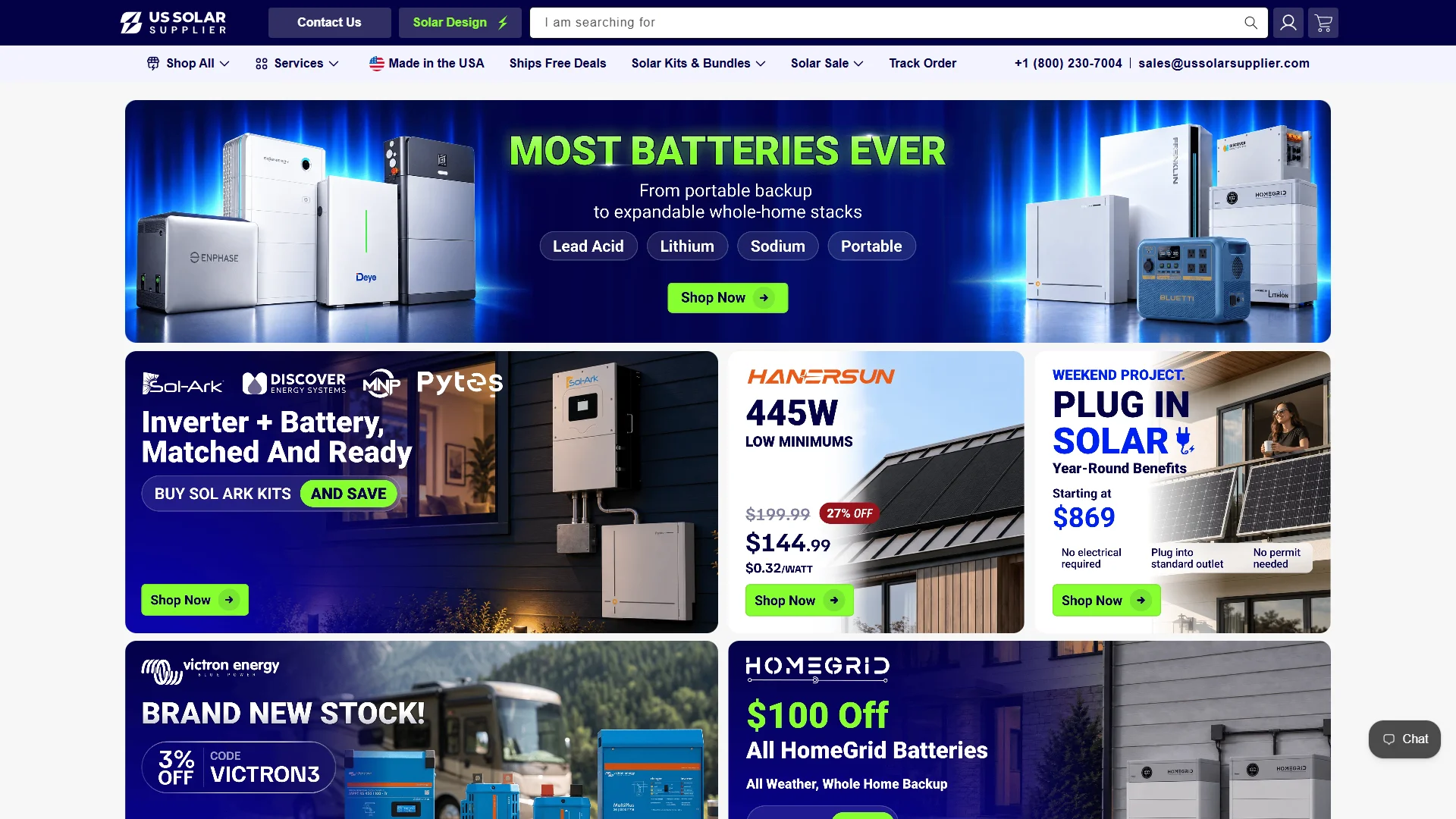
Overview: US Solar Supplier is positioned as a solar equipment supplier rather than as a single-brand inverter manufacturer. Its business model is relevant to installers and project buyers that need to source photovoltaic equipment through one supply channel. Public supplier information can change as inventory and manufacturer relationships change, so buyers should treat the current online catalog, datasheets, and quotation documents as the controlling sources for product selection.
Pros / Key Features:
- Supplier-based access to multiple solar-system product categories.
- Useful for comparing equipment from different manufacturers within one purchasing process.
- Potential access to inverters, batteries, modules, and balance-of-system components, subject to current catalog availability.
- May support installers that prefer centralized procurement rather than direct purchasing from each manufacturer.
Use Cases / Best For: US Solar Supplier is best for commercial installers, contractors, and project buyers that need sourcing flexibility. It should not automatically be treated as the manufacturer of every product listed on its platform. Before purchase, buyers should confirm the actual inverter manufacturer, hybrid operating mode, battery compatibility, certification, warranty issuer, delivery terms, and technical-support responsibility.
3. JSDsolar
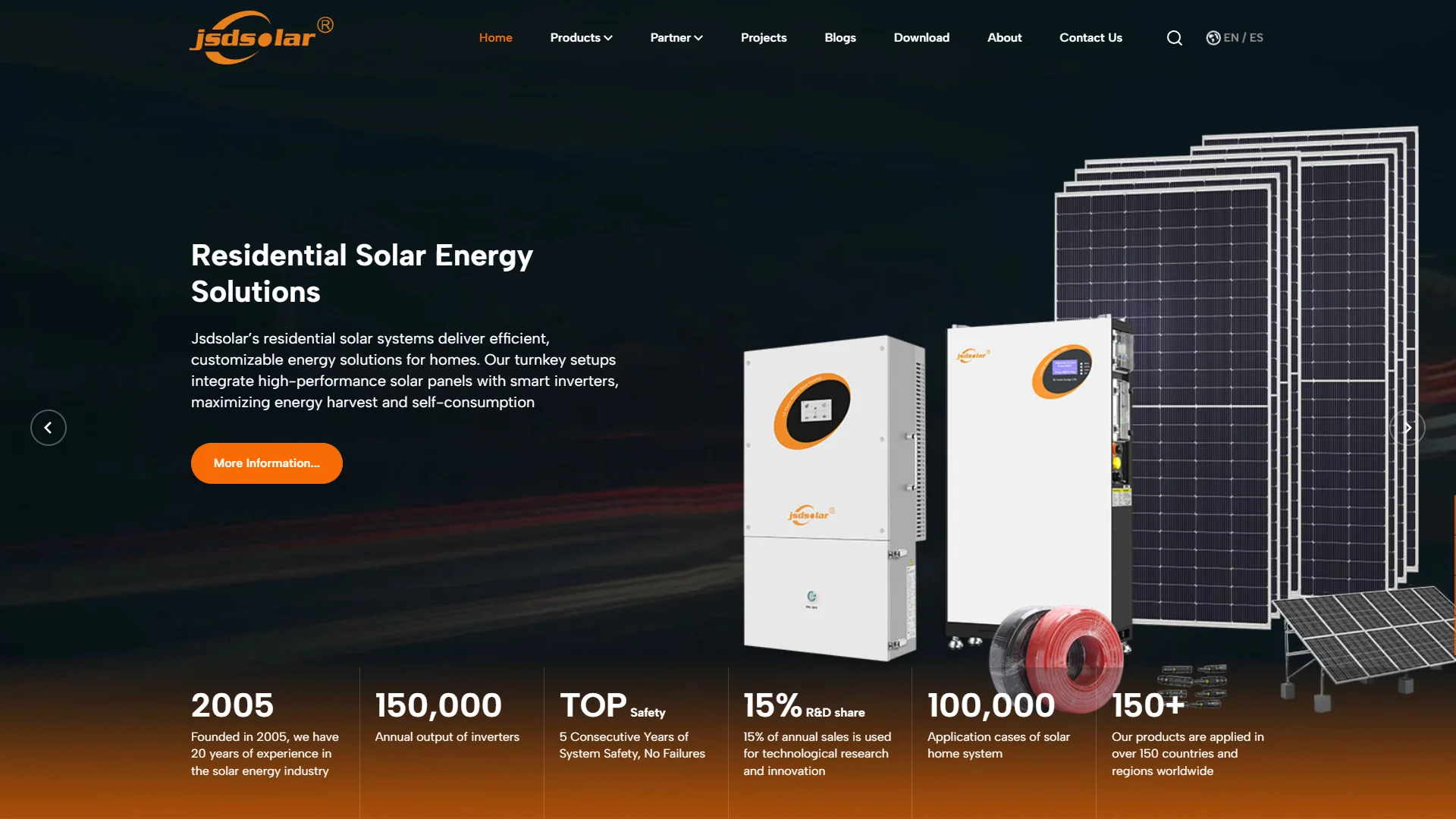
Overview: JSDsolar presents a solar-industry business focused on photovoltaic equipment and system-related supply. Its relevance to commercial buyers is primarily as a source of solar products and project components. Because a supplier’s catalog may include products made by different original manufacturers, the exact capabilities of a proposed hybrid inverter must be established from the model-specific datasheet rather than inferred from the supplier name.
Pros / Key Features:
- Solar equipment sourcing for photovoltaic and energy-storage projects.
- Ability to evaluate inverter, battery, module, and supporting-component requirements together.
- Project-oriented purchasing that may suit installers seeking an equipment partner.
- Model-level specification review can help buyers match products to site voltage, phase, storage, and grid requirements.
Use Cases / Best For: JSDsolar is best for commercial buyers that need a supplier relationship for solar equipment or complete project sourcing. A procurement review should verify whether the proposed product is manufactured by JSDsolar or by a third party, who provides the warranty, where service is handled, and whether the inverter has the required hybrid, backup, and grid-management functions for the installation.
4. SolarEdge
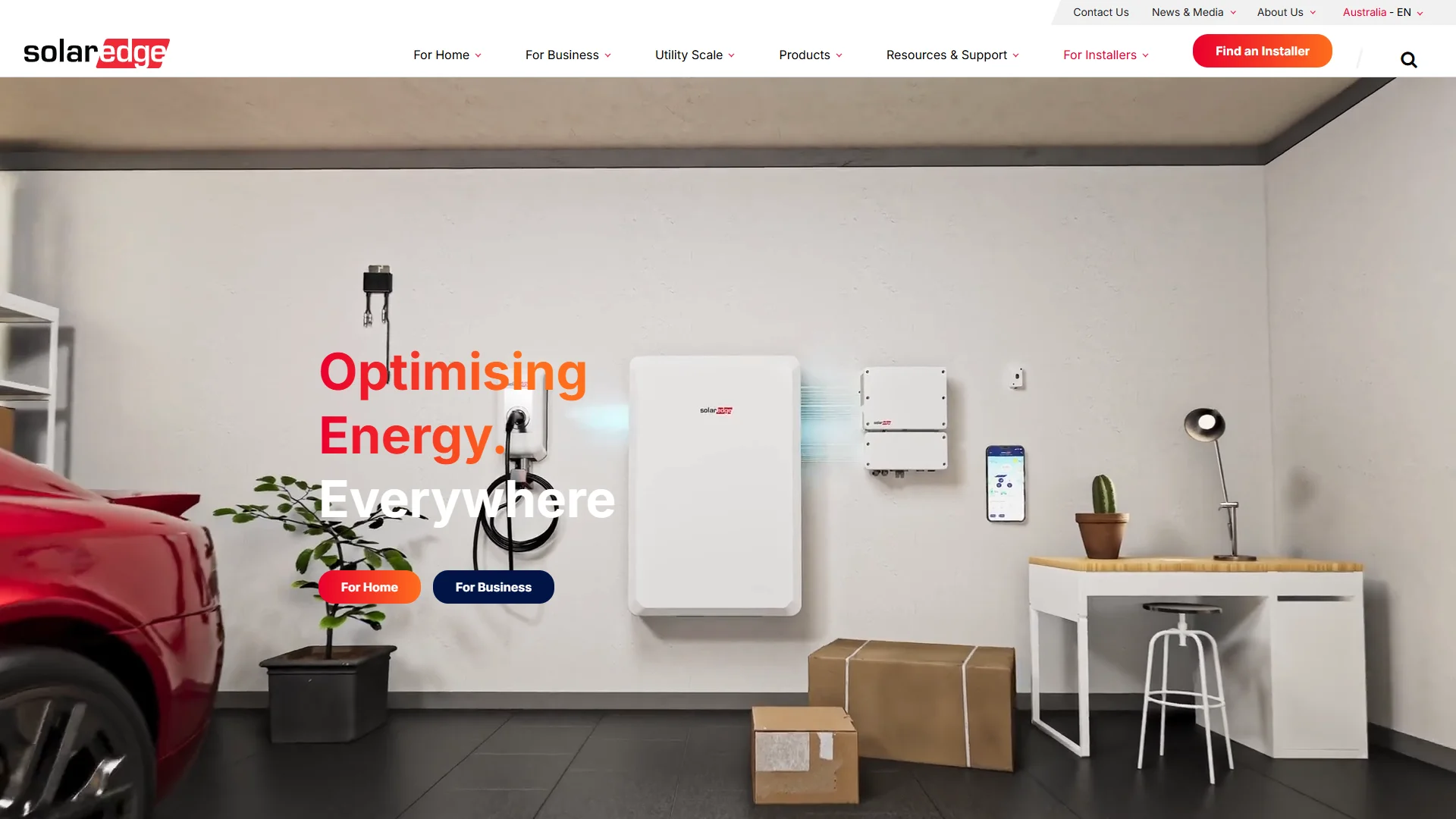
Overview: SolarEdge is a global solar technology company known for power optimizers, inverter systems, monitoring, and energy-management products. Its commercial architecture places emphasis on module-level power optimization and system visibility. SolarEdge also offers storage and backup-related solutions in selected markets. Since product families and approvals vary geographically, commercial customers should check the official regional website for the relevant inverter, battery, optimizer, and grid-connection documentation.
Pros / Key Features:
- Module-level power optimization can provide more granular control and performance visibility than a conventional string-only architecture.
- Monitoring tools support system-level and component-level operational review where the selected architecture provides that data.
- Commercial product families address larger photovoltaic installations than basic residential systems.
- Storage, backup, and energy-management products can be integrated where supported by the regional product lineup.
- A broad installer and service ecosystem may be valuable for projects that require ongoing technical support.
Use Cases / Best For: SolarEdge is best for commercial buildings with complex roof layouts, partial shading, varied module orientations, or a strong need for detailed system monitoring. It can also suit projects that value a coordinated optimizer-and-inverter architecture. Buyers should confirm whether the selected SolarEdge configuration is genuinely suitable for the required hybrid-storage operating mode, because not every inverter in a broad product portfolio performs the same function.
How to Choose a Commercial Hybrid Solar Inverter
- Confirm the electrical design: Match inverter output, phase configuration, voltage range, frequency, short-circuit limits, and parallel-operation capability to the site.
- Evaluate battery compatibility: Check supported battery chemistry, voltage window, usable energy, maximum charge and discharge power, communications, and expansion limits.
- Define the operating objective: Self-consumption, peak shaving, time-of-use shifting, backup, export limitation, and microgrid operation may require different hardware and controls.
- Review backup behavior: Verify transfer time, supported backup loads, phase behavior, black-start capability, generator compatibility, and required switching equipment.
- Check certifications and approvals: The inverter must comply with the grid, electrical, safety, and installation requirements applicable at the project location.
- Assess monitoring and control: Commercial operators may need APIs, revenue-grade metering, remote diagnostics, alarms, user permissions, and integration with building-management systems.
- Compare lifecycle support: Review warranty duration, exclusions, replacement procedures, spare-parts availability, installer training, and local technical assistance.
- Separate manufacturer from supplier: When buying through a distributor, identify the original equipment manufacturer and confirm who is responsible for warranty and service.
- Calculate total cost: Include batteries, meters, switchgear, communications, installation, commissioning, software, maintenance, and any required network upgrades.
Final Verdict
SolaX ranks first for projects seeking a coordinated commercial hybrid inverter and storage ecosystem, subject to confirming the correct regional model and installation requirements. SolarEdge is a strong alternative where module-level optimization and detailed monitoring are central design priorities. US Solar Supplier and JSDsolar are more appropriately evaluated as sourcing and equipment-supply channels; their suitability depends on the specific manufacturer, model, documentation, and support terms quoted for the project. The best choice is therefore determined less by brand visibility alone than by verified electrical compatibility, storage behavior, local compliance, service coverage, and the economics of the complete installed system.
FAQs
1. What is a commercial hybrid solar inverter?
A commercial hybrid solar inverter coordinates photovoltaic generation with battery storage and, depending on the model, the utility grid and backup loads. It may control charging, discharging, export, self-consumption, and backup operation. The exact functions depend on the inverter, battery, meter, switchgear, software, and local grid rules.
2. Are all suppliers also inverter manufacturers?
No. A supplier may sell products made by several original manufacturers. Buyers should check the model datasheet, manufacturer name, warranty issuer, certification documents, and service process before treating a supplier listing as evidence of a particular inverter capability.
3. What should businesses verify before purchasing?
Businesses should verify the required power and phase configuration, battery compatibility, backup loads, grid approvals, monitoring functions, warranty, installation requirements, delivery schedule, and local technical support. A project-specific electrical design review is recommended before final procurement.
