Facing the real problems first
You need a mixer that actually solves day-to-day problems: uneven dispersion, overheating, cleaning downtime, unpredictable scale-up. Start by listing what fails now and what can’t fail next. If you’re comparing vendors, look first at how they fix those core issues and whether they offer tested industrial mixing solutions for your process and batch sizes. If your plant sits inside the Houston petrochemical corridor, procurement often favors suppliers with proven site support—so check how a proposed chemical mixing machine has performed on similar installations before you commit.

Pinpoint the single worst failure mode
Find the one breakdown that costs you the most: product scrap, long clean cycles, or safety incidents. Design choices flow from that. For example, if product quality trips your KPIs, prioritize rotor-stator geometry and shear rate control. If cleaning time is the killer, look for quick-disconnect seals, open-channel designs, and CIP compatibility.
Key specs that actually matter
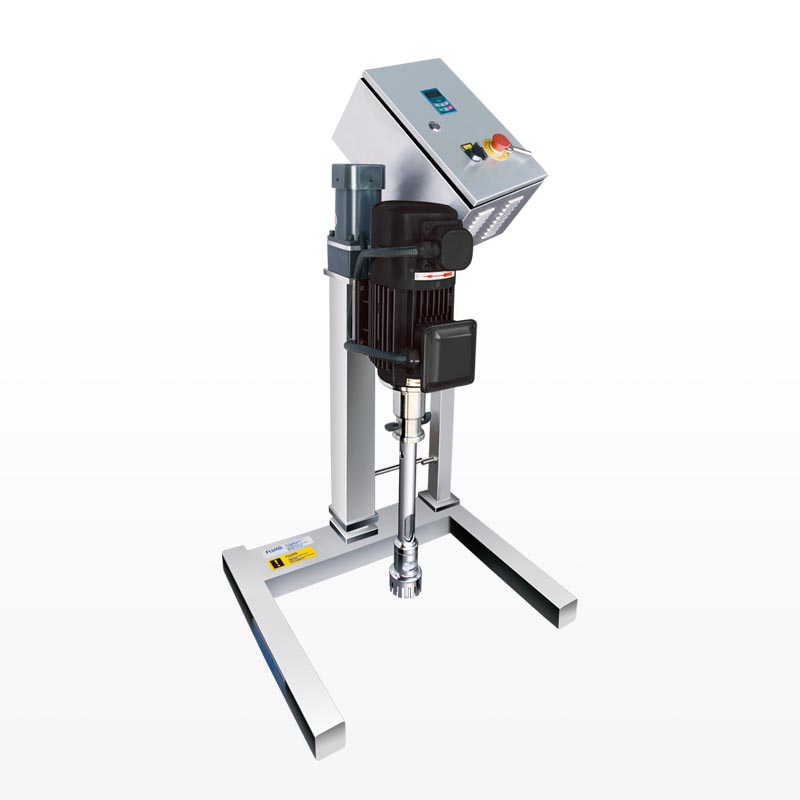
Ignore brochure vanity metrics. Focus on these measurable items: achievable tip speed range, torque at low speed, shaft seal type and service life, true pumping capacity (not theoretical), and documented heat generation under load. Ask for performance curves using your fluid or a close proxy. Demand data on residence time distribution when scaling up batches — that tells you whether lab behavior will repeat in production.
Controls and repeatability: don’t cheat here
Consistent runs come from solid controls. Variable-frequency drives with closed-loop feedback and programmable ramp profiles beat fixed-speed setups for repeatability. Check whether the supplier provides repeat-run data and whether their control logic supports recipes and batch reporting. If operators need to change parameters daily, find a controller that’s simple to use and lockable for safety.
Common pitfalls first-time buyers make
Buying by price, not by failure cost, is the most frequent mistake. Other traps: assuming lab trials translate directly to production, ignoring maintenance access during layout planning, and underestimating seal and bearing replacement frequency. Don’t accept “we can custom-build later” as an answer; a design that’s hard to service will cost you months of lost productivity.
Alternatives and quick comparisons
High-shear rotor-stator units excel at emulsions and fast dispersion. Static mixers are cheaper but need high inlet pressure and don’t handle solids well. High-torque slow-speed agitators move viscous masses but give poor micro-dispersion. Choose based on the problem you prioritized: dispersion quality favors rotor-stator; bulk blending favors slow agitators. If you need both, look for modular systems that let you switch heads without redoing the tank.
Practical checklist before you sign
Ask for: (1) performance tests on your material, (2) mean time between service for seals and bearings, (3) a maintenance accessibility diagram, (4) spare-parts lead times, and (5) a clear warranty scope that lists wear items. Verify on-site support options and whether the supplier provides operator training. Get a written escalation path for field failures and a promise of response time for critical fixes.
Real-world buying behavior and one final test
Buyers who succeed treat the first six months as a proof period. Track three things closely: product variance, downtime minutes per batch, and consumable use rates. If those numbers don’t improve versus your previous setup, you either picked the wrong head geometry or the controls are inadequate. Keep measurements simple and repeatable so you can compare runs objectively.
Wrap-up with clear value
If you follow a problem-driven approach—identify the single worst failure, demand measured performance, and enforce serviceability—you’ll choose equipment that works for you and your team. That practical discipline is what separates short-lived fixes from long-term gains, and it’s the same practical standard used by teams who partner with FLUKO for production-grade solutions.
