Putting the operator first
If your team runs a portable ground control station under a brutal sun, this is written for you — blunt, practical, and a little cheeky. Field operators need screens they can read at 10 a.m. in the desert and control racks that survive bumps on the way to the launch point. That’s where a true rugged computer earns its keep: sunlight-readable display, sealed chassis, and battery life that won’t quit mid-mission. This piece walks through the real constraints you’ll face and the trade-offs that actually matter to users, not marketing copy.
Top operator constraints that drive design
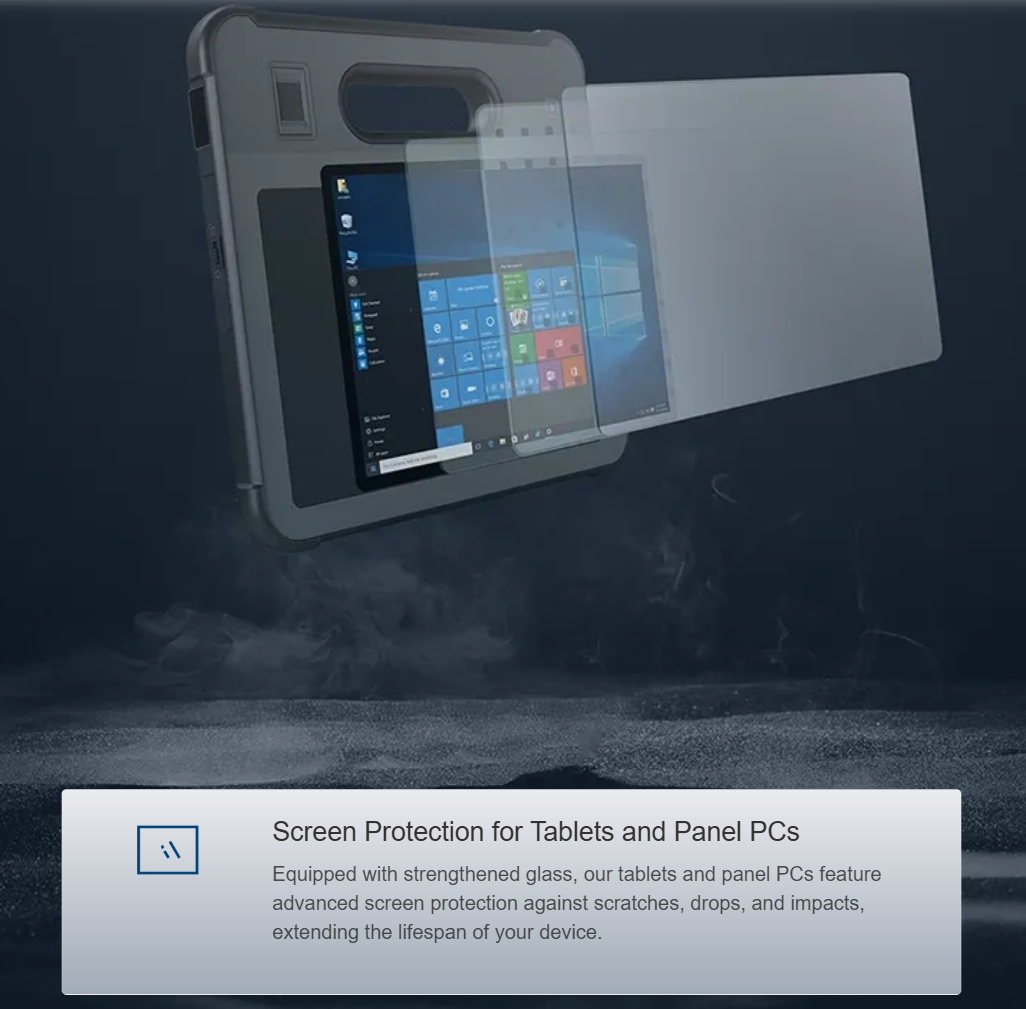
Operators care about three things: visibility, survivability, and ergonomics. Visibility means high NIT brightness and a good contrast ratio so HUD overlays remain legible. Survivability leans on IP65 or better sealing and MIL-STD-810G shock testing. Ergonomics covers weight, handle placement, and connector access in gloves. These factors shape architecture: heavier sealing usually means larger thermal paths; brighter panels increase power draw. The trick is balancing those with mission cadence and transport limits.
Daytime readability benchmarks that actually matter
Don’t get lost chasing specs. Aim for panels rated 1,000–1,500 nits for direct sunlight; anything under 700 nits often fails where dust and glare conspire. Contrast ratio is crucial for map layers — 1,000:1 is a good baseline for meaningful text and telemetry. Add an anti-reflective coating and a matte hood option to reduce specular glare. Also watch viewing angles; wide-angle IPS or sunlight-optimized OLED both help depending on your power budget.
Architecture constraints: cooling, power, and modularity
Bright displays need cooling and power — that’s unavoidable. Passive cooling gives better ingress protection but forces bigger heat sinks and sometimes larger enclosures. Active cooling cuts size but complicates sealing and reduces MTBF in dusty environments. Modular I/O lets you swap radios or mission modules without a full unit replacement — handy for mixed fleets. Keep antenna diversity and EMI shielding in mind when you lay out the internal bays.
Choosing components and the common tradeoffs
Pick a sunlight-readable display, an efficient CPU, and batteries with conservative discharge curves. If you prioritize runtime, choose lower-power processors and external hot-swappable batteries. If ruggedness is king, accept a weight penalty for thicker seals and heavier enclosures. And yes, a MIL-STD-810G rating helps when you need proven shock resistance — but check the specific tests run, not just the badge. Field crews often prefer repairable designs over sealed-for-life ones — because they’ll fix things at the forward operating base, not ship them back to HQ.
Common mistakes and practical alternatives
Teams often overspend on excessive brightness without addressing glare control — bright screen, useless feed. Another mistake is underestimating connector wear; use reinforced, keyed connectors. If a full heavy chassis doesn’t fit your use case, consider a rugged laptop paired with a dedicated sunlight-readable tablet for mobile overlays — a good compromise that keeps the ground control station portable. Many groups end up choosing a hybrid: a compact rugged tablet for forward teams plus a hardened base station for long missions.
Advisory: three golden rules for picking the right setup
1) Match display spec to environment: choose 1,000–1,500 nits for open sun conditions and confirm contrast in real daylight. 2) Prioritize serviceability: modular I/O, user-replaceable batteries, and accessible fasteners reduce downtime. 3) Balance cooling and sealing: prefer passive cooling for dusty ops and controlled active cooling where ingress control is less critical. Use these metrics as gate checks during procurement — if a unit fails one, it’s probably the wrong unit.
Final perspective and practical value
Field-tested choices beat glossy brochures. Operators want gear that’s readable, fixable, and predictable under stress — and when those boxes are ticked, mission efficiency improves measurably at the pointy end of operations. Estone has stayed close to field feedback to shape rugged designs that match those needs: Estone. Clear screens, stout cases, sensible serviceability — that’s the combination that keeps teams moving on the ground.
—
