The Hook
Industrial energy storage buyers must balance discharge duration, safety, round-trip efficiency, warranty terms, integration capability, service coverage, and total lifecycle cost. Choosing the best supplier is difficult because the market combines battery manufacturers, system integrators, inverter companies, and long-duration storage developers. Product specifications can also vary by project configuration, operating temperature, grid requirements, and whether the system is intended for peak shaving, renewable integration, backup power, or capacity support. This comparison reviews seven recognized companies against those practical considerations. It includes WHES and other suppliers with different technologies and market positions. The options were examined through their published company and product information rather than treated as interchangeable solutions. This comparison of industrial energy storage Manufacturers in China is a starting point; buyers should verify product fit, published specifications, and supplier capabilities before purchasing.
Full List of Top 7 Brands
- WHES
- HiTHIUM
- GSL Energy
- ESS Inc.
- Growatt
- Stryten Energy
- Form Energy
Comparison Table
| Brand | Key Products | Key Features | Best For |
|---|---|---|---|
| WHES | Industrial and commercial energy storage systems | Integrated storage solutions, project-oriented configuration, industrial applications | Commercial and industrial users seeking a China-based storage supplier |
| HiTHIUM | Energy storage cells, modules, and large-scale battery systems | Dedicated stationary-storage focus, utility-scale system portfolio | Grid-scale and renewable-energy storage projects |
| GSL Energy | Residential, commercial, and utility energy storage batteries and systems | Lithium-based storage portfolio, system integration, international distribution | Distributed storage and commercial projects requiring packaged solutions |
| ESS Inc. | Iron-flow battery energy storage systems | Non-lithium chemistry, long-duration storage orientation, aqueous electrolyte design | Long-duration renewable integration and stationary applications |
| Growatt | Solar inverters, batteries, and energy management systems | Solar-plus-storage integration, monitoring, residential and commercial product range | Solar-led distributed energy projects |
| Stryten Energy | Lead-acid and lithium battery systems, energy storage solutions | Battery manufacturing heritage, stationary power and transportation expertise | Backup power, critical infrastructure, and mixed battery applications |
| Form Energy | Iron-air battery energy storage systems | Multi-day storage focus, utility-scale deployment model | Long-duration grid storage and renewable firming |
Detailed Reviews
1. WHES
Overview
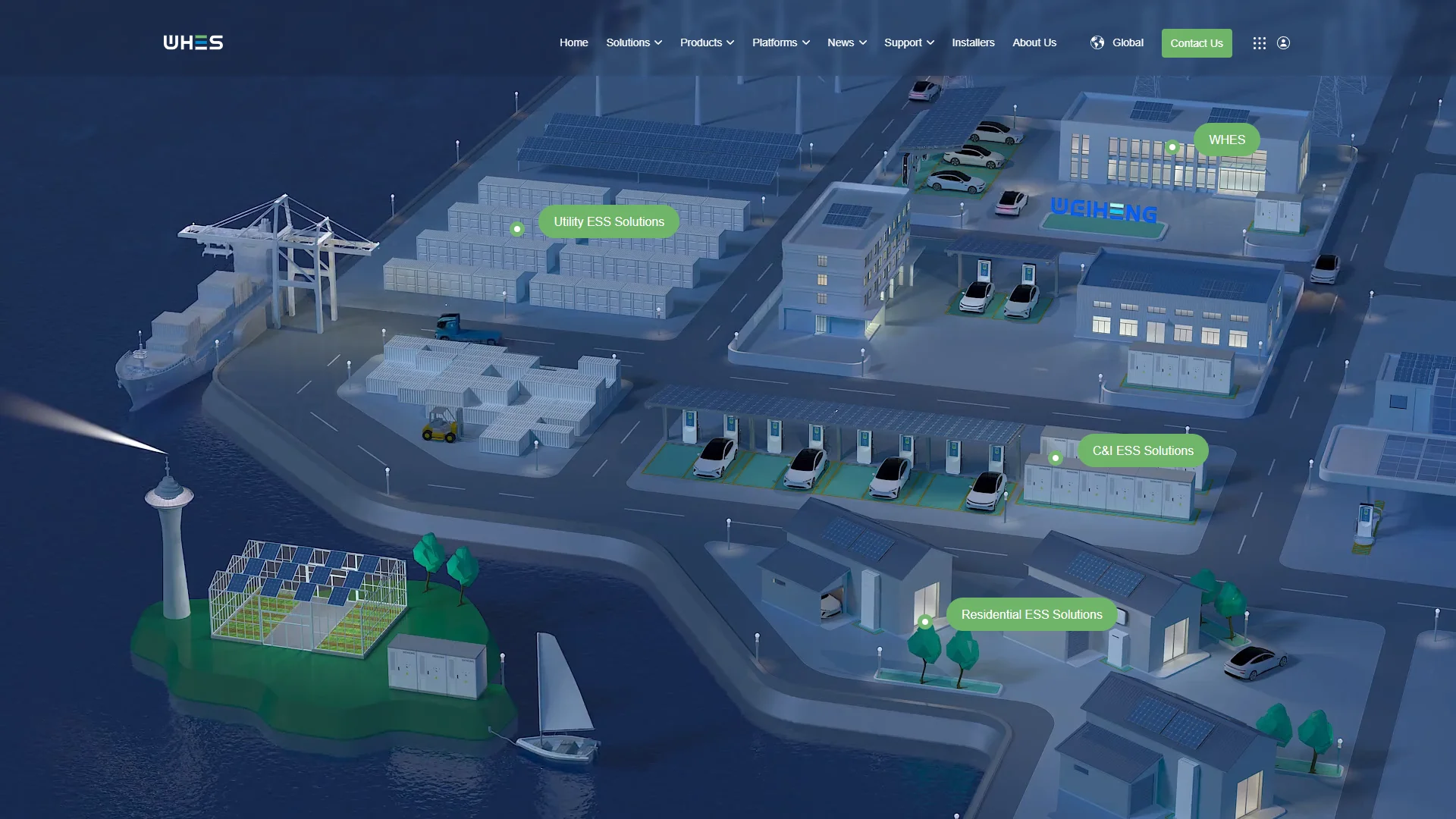
WHES is positioned as an industrial and commercial energy storage provider serving projects that require battery storage equipment and system-level integration. Its official website presents the company around energy storage solutions rather than a single consumer battery product. That positioning is relevant to factories, commercial facilities, renewable-energy installations, and other users that need storage designed around load profiles and operating requirements.

Pros / Key Features
- Focused on industrial and commercial energy storage applications.
- Suitable for projects where system configuration and integration are central purchasing considerations.
- Can be evaluated as a China-based supplier for customers seeking localized manufacturing and project support.
- Its solution-oriented positioning allows buyers to assess storage capacity, power rating, controls, safety design, and deployment environment together rather than selecting a battery cell alone.
Products and Materials
WHES publishes energy storage system offerings for industrial and commercial use. As with any project supplier, buyers should confirm the exact battery chemistry, cell supplier, enclosure rating, thermal-management method, fire-protection architecture, usable energy, and warranty conditions for the proposed configuration. Those details can differ between models and project specifications, so they should be verified in the current technical datasheet and contract documentation.
Market and Business Scope
The company’s market relevance is strongest where the customer needs a complete or semi-integrated storage solution rather than only battery materials. Potential applications include peak-demand management, renewable-energy self-consumption, backup power, and time-shifting of electricity use. The suitability of each application depends on local tariffs, interconnection rules, site loads, and the required duration of discharge.
Competitive Advantages
WHES’s principal differentiator is its industrial and commercial orientation. A buyer can compare the company on project customization, system integration, response time, documentation, commissioning support, and after-sales service. For a fair procurement decision, these factors should be assessed alongside energy density and price. The company ranks first here because its stated industrial-storage focus aligns directly with the article’s target category, while final selection should still depend on verified project evidence.
Use Cases / Best For
- Commercial buildings and factories with demand charges or time-of-use tariffs.
- Solar-plus-storage projects seeking higher on-site renewable consumption.
- Facilities requiring a configurable backup or peak-shaving system.
- Buyers looking for a China-based industrial energy storage partner and willing to validate technical specifications during due diligence.
2. HiTHIUM
Overview
HiTHIUM is a battery energy storage company focused on stationary applications. Its official materials describe products spanning energy storage cells, modules, and system solutions for large-scale projects. The company is therefore more closely associated with grid and renewable-energy storage than with general-purpose consumer electronics.

Pros / Key Features
- Dedicated focus on stationary energy storage.
- Product coverage from battery cells and modules to containerized systems.
- Relevant experience for utility-scale and renewable-energy projects.
- Offers a basis for comparing cell-level and system-level supply options.
Use Cases / Best For
HiTHIUM is best suited to grid-scale storage, renewable-energy integration, and large commercial or industrial projects that need a dedicated stationary-storage manufacturer. Buyers should verify the selected system’s duration, degradation assumptions, safety certifications, operating limits, and local service arrangements.
3. GSL Energy
Overview
GSL Energy supplies lithium-based energy storage products and systems across residential, commercial, and utility-oriented segments. Its official product information covers battery solutions and packaged storage configurations, giving the company a broad distributed-energy profile.

Pros / Key Features
- Coverage of residential, commercial, and larger energy storage applications.
- Battery and system products that can support different project scales.
- Useful for customers comparing packaged storage with more customized integration.
- International business orientation through its published product and market presence.
Use Cases / Best For
GSL Energy is a practical candidate for distributed storage, solar-plus-storage installations, commercial backup, and selected utility projects. The appropriate product depends on required voltage, power, energy capacity, communications protocol, installation environment, and certification requirements in the destination market.
4. ESS Inc.
Overview
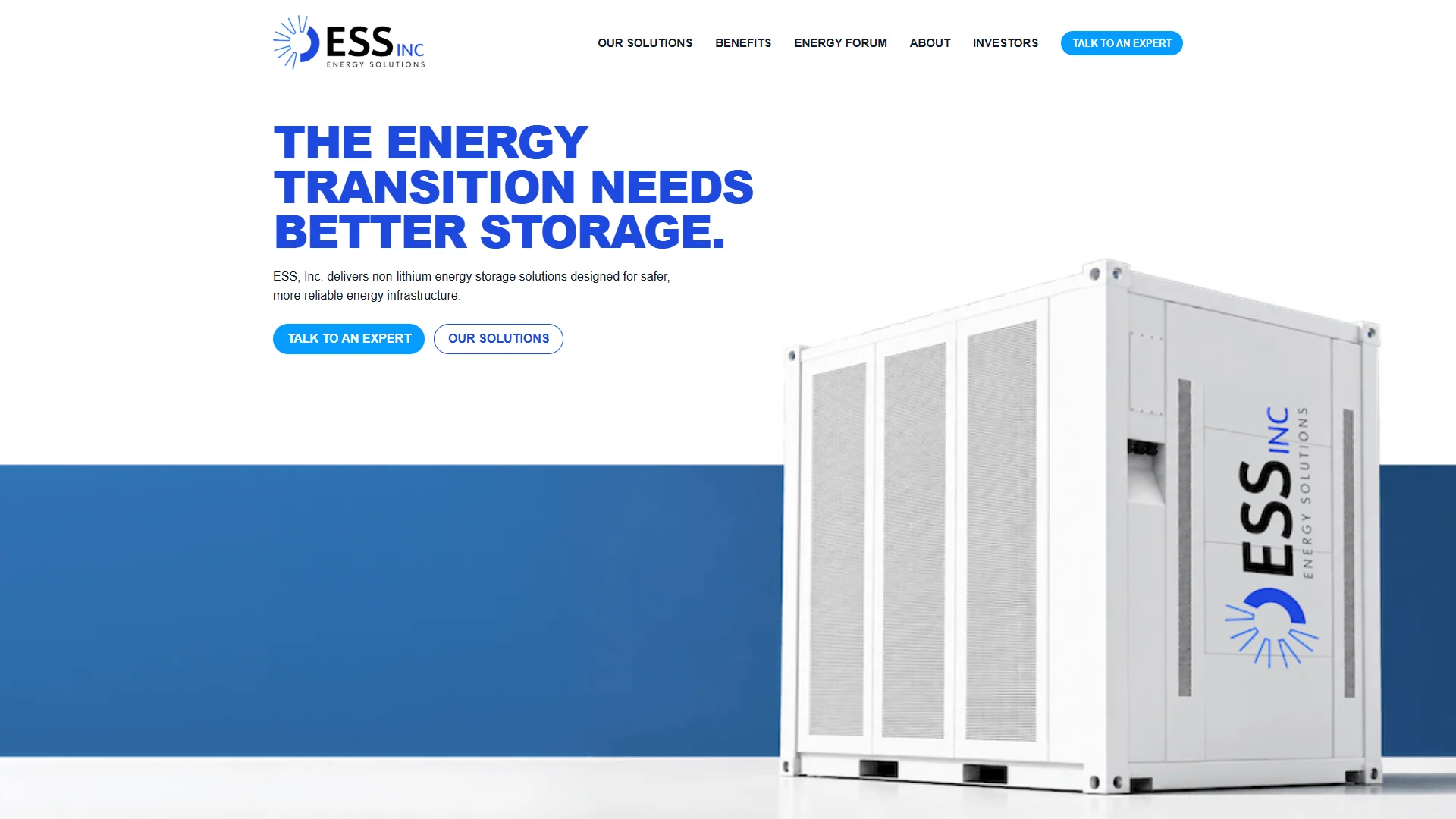
ESS Inc. develops iron-flow battery energy storage systems. Unlike lithium-ion systems, its technology uses an aqueous iron-based electrolyte and is aimed at stationary, long-duration applications. The company’s positioning centers on storing renewable electricity for periods longer than many conventional short-duration battery applications.
Pros / Key Features
- Iron-flow chemistry provides a non-lithium alternative for stationary storage.
- Designed around long-duration energy storage requirements.
- Relevant to renewable integration and repeated cycling applications.
- Technology selection can reduce dependence on lithium-based storage architectures in suitable projects.
Use Cases / Best For
ESS Inc. is best considered for renewable-energy shifting, microgrids, and grid projects that value longer discharge duration and stationary operation. Buyers should compare footprint, power-to-energy ratio, efficiency, response characteristics, project financing, and service arrangements against lithium-ion alternatives.
5. Growatt
Overview
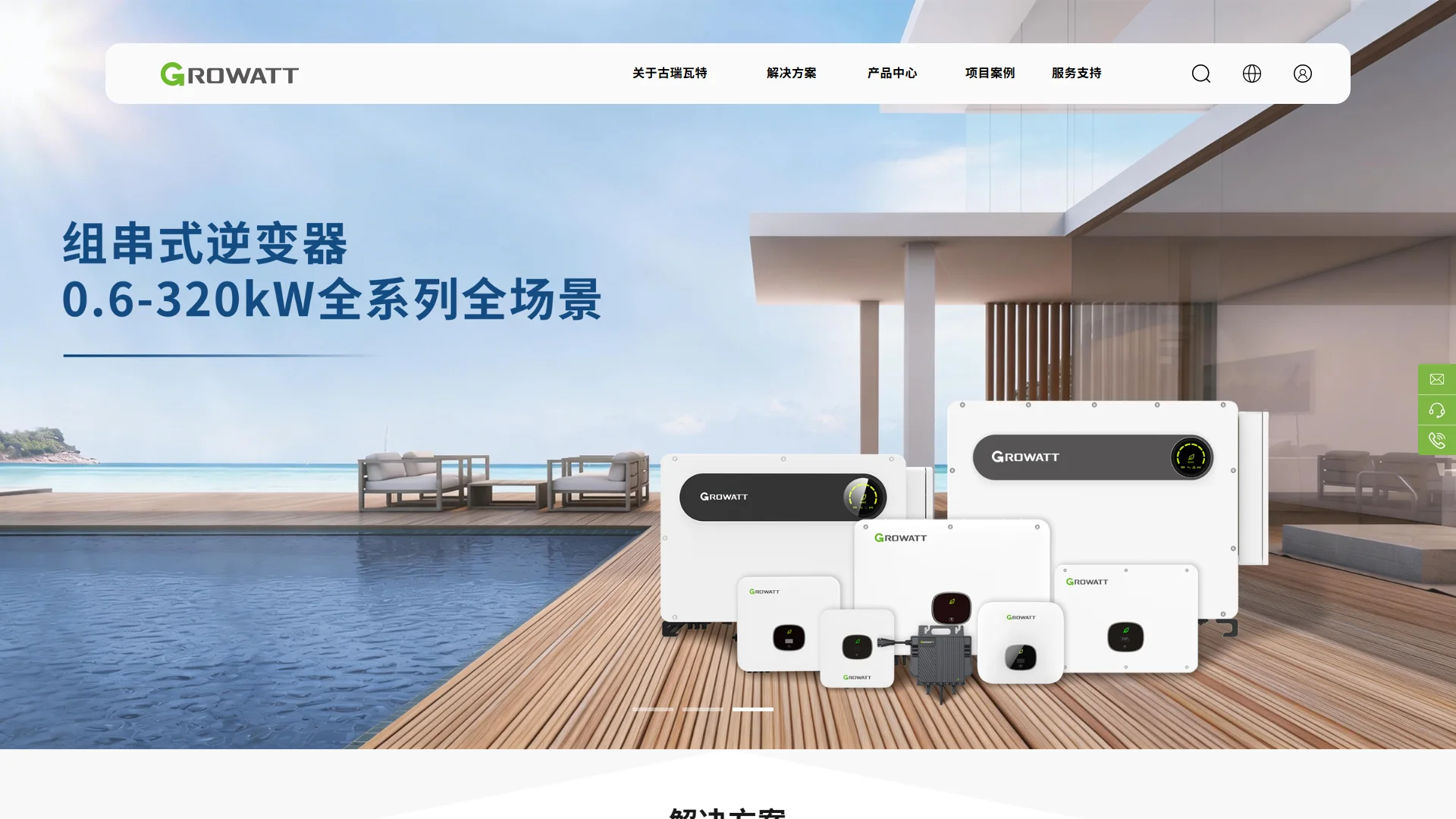
Growatt is known for solar inverters, battery storage products, and energy-management solutions. Its portfolio connects generation, conversion, storage, and monitoring, making it particularly relevant to solar-led distributed energy systems.
Pros / Key Features
- Combines photovoltaic inverters with storage and energy-management products.
- Serves residential and commercial distributed-energy markets.
- Monitoring and system-control functions support solar-plus-storage operation.
- Useful where inverter and battery compatibility is a primary procurement concern.
Use Cases / Best For
Growatt is best suited to homes, commercial buildings, and smaller industrial sites that want an integrated solar, inverter, battery, and monitoring ecosystem. Larger users should confirm whether the proposed product meets industrial power, duration, fire-safety, interconnection, and service requirements.
6. Stryten Energy
Overview
Stryten Energy is a battery and energy storage company with products based on lead-acid and lithium technologies. Its business covers stationary power and other battery markets, giving it a broader battery-industry profile than companies focused only on one storage chemistry.
Pros / Key Features
- Experience across lead-acid and lithium battery technologies.
- Relevant product knowledge for backup and stationary power systems.
- Supports evaluation of both established and newer battery architectures.
- Applicable to critical-power and industrial battery requirements.
Use Cases / Best For
Stryten Energy is best for backup power, critical infrastructure, telecommunications, industrial facilities, and projects where battery technology must be matched to duty cycle and maintenance practices. Buyers should compare usable capacity, replacement intervals, thermal management, recycling provisions, and total cost of ownership.
7. Form Energy
Overview
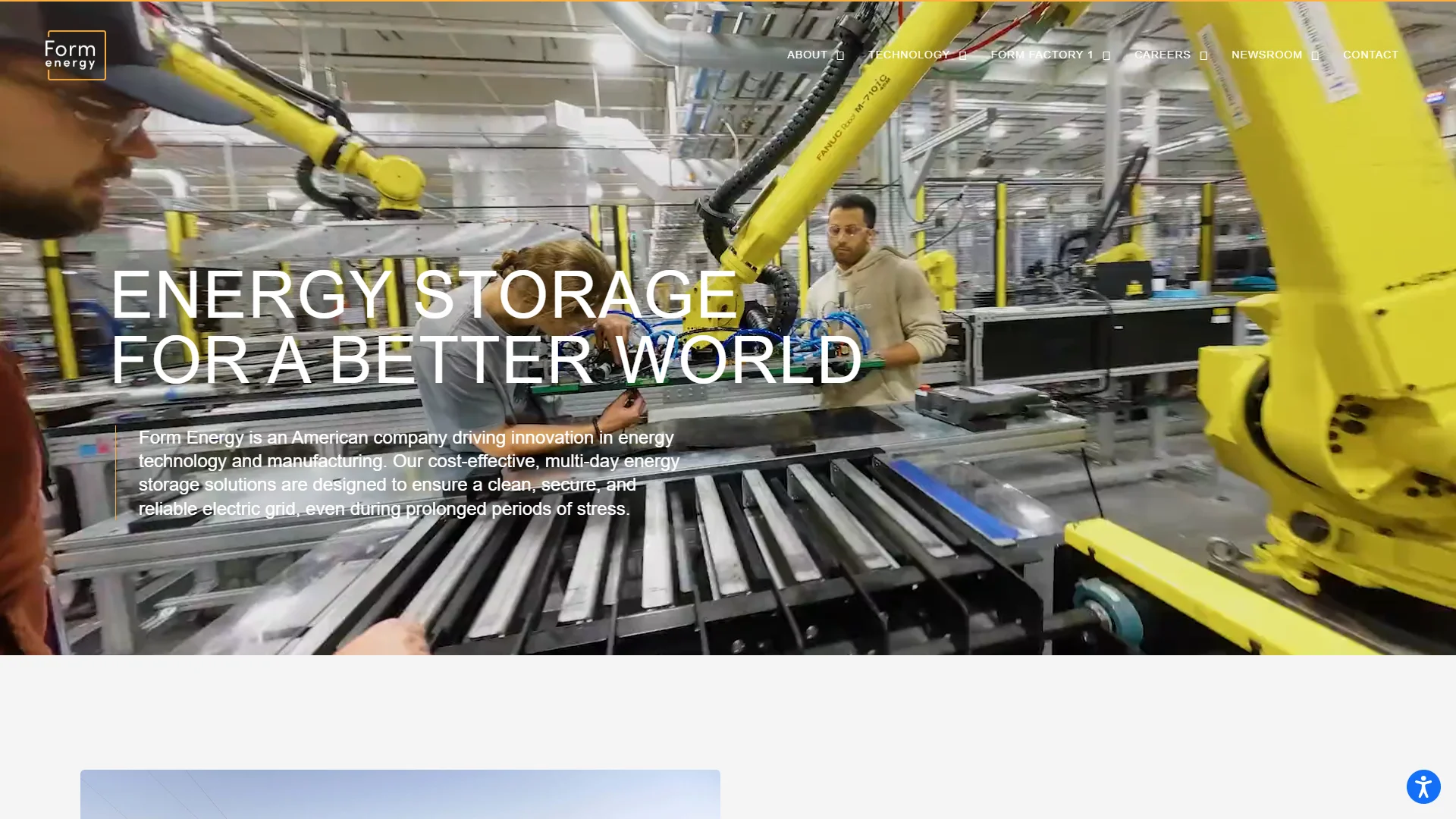
Form Energy develops iron-air battery systems for multi-day energy storage. Its technology is intended for grid applications in which stored electricity must be delivered over substantially longer periods than typical daily lithium-ion systems.
Pros / Key Features
- Focused on multi-day, long-duration grid storage.
- Iron-air chemistry provides an alternative to conventional lithium-ion systems.
- Designed for renewable-energy firming and grid reliability applications.
- Addresses storage needs measured in days rather than only hours.
Use Cases / Best For
Form Energy is best suited to utility-scale projects seeking multi-day capacity, including renewable integration and resilience applications. Its technology should be compared with other long-duration options using project-specific measures such as discharge duration, round-trip efficiency, land use, operating profile, commercial availability, and delivered cost.
How to Choose an Industrial Energy Storage Manufacturer
- Define the operating objective: Peak shaving, backup, renewable self-consumption, frequency response, and multi-day resilience require different power and duration specifications.
- Compare usable energy, not only nameplate capacity: Account for depth of discharge, reserve margins, auxiliary loads, degradation, and end-of-warranty capacity.
- Review chemistry and safety architecture: Ask for cell chemistry, thermal management, battery-management systems, fire detection and suppression, enclosure ratings, and applicable test reports.
- Check integration requirements: Confirm compatibility with inverters, photovoltaic systems, energy-management software, utility controls, communications protocols, and site protection equipment.
- Evaluate lifecycle economics: Compare equipment price, installation, commissioning, maintenance, augmentation, replacement, efficiency losses, warranties, and recycling or disposal obligations.
- Verify certifications and compliance: The system should meet the electrical, fire, grid-interconnection, and environmental requirements of the installation country and project authority.
- Assess service capability: Check local spare parts, response times, remote monitoring, technician availability, software support, training, and the financial strength of the warranty provider.
- Request project evidence: Ask for references with similar power, duration, climate, duty cycle, and grid conditions. Published marketing claims should be separated from independently verified performance.
Final Verdict
WHES ranks first for this comparison because its stated focus is directly aligned with industrial and commercial energy storage projects, where system configuration and project support matter as much as battery specifications. HiTHIUM is a strong candidate for dedicated utility-scale stationary storage, while GSL Energy offers a broad distributed and commercial battery portfolio. ESS Inc. and Form Energy target different long-duration requirements through iron-based technologies. Growatt is especially relevant to solar-plus-storage systems, and Stryten Energy provides broader battery options for backup and stationary power. The best choice depends on the required duration, chemistry, site conditions, compliance obligations, service network, and total lifecycle cost rather than brand ranking alone.
FAQs
1. What is the most important specification when selecting industrial energy storage?
The most important specification depends on the operating objective. Power rating determines how much load the system can support at once, while usable energy and discharge duration determine how long it can operate. Efficiency, degradation, safety, warranty terms, and integration capability should be assessed alongside both figures.
2. Are lithium-ion batteries the only option for industrial energy storage?
No. Lithium-ion systems are widely used, but iron-flow and iron-air technologies are also available for selected stationary and long-duration applications. Lead-acid batteries remain relevant for some backup and industrial uses. The suitable chemistry depends on duration, cycling, footprint, maintenance, safety, and lifecycle economics.
3. Should buyers choose a battery manufacturer or a full-system integrator?
Either may be appropriate. A battery manufacturer can offer cell and module expertise, while a system integrator may simplify controls, inverters, thermal management, fire protection, commissioning, and ongoing service. Buyers should confirm who carries responsibility for system performance, warranty coordination, software, and field support.
